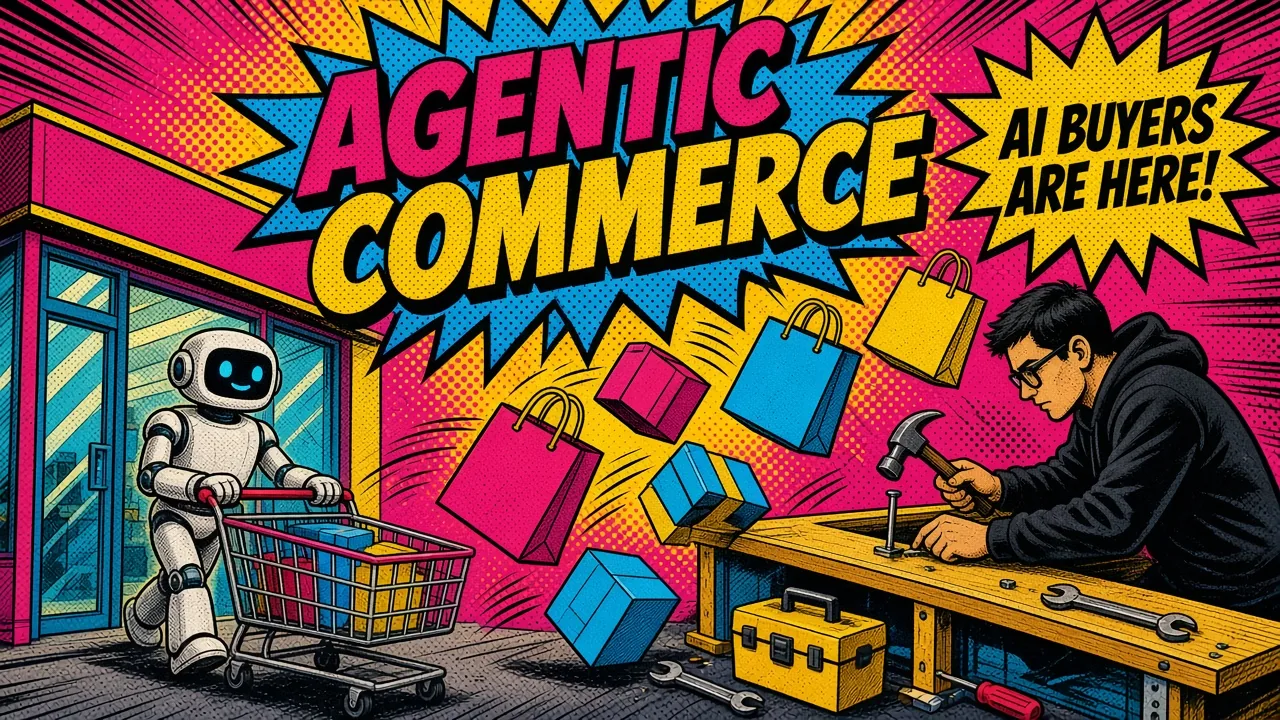
Your beautiful Shopify theme is about to become invisible. The next shopper has no eyes, never clicks a button and only reads your data.
For a decade, we have obsessed over conversion rate optimization, pixel-perfect layouts and fast-loading Liquid templates. We built for human eyes.
But a new type of shopper is arriving at the digital storefront. They don’t have eyes, they don’t click buttons, and they don’t care about your hero slider.
They are autonomous AI agents.
The shift from human browsing to agentic commerce is a big architectural shift for Shopify. If you are still “the theme guy” or “the Liquid expert,” your skill set is about to hit a wall.
I have been building on the web for over ten years, and the era of building for agents is here. It is time to move from designing pixels to designing protocols.
The end of the traditional funnel
Most developers still think the old way. We build a site, drive traffic to a landing page and hope the user finds the checkout. This is a manual, high-friction process.
Today, buyers increasingly use tools like ChatGPT, Gemini or Microsoft Copilot to do the “work” of shopping. They ask for a waterproof hiking boot under $150 with specific shipping requirements.
The AI doesn’t visit your store to browse. It queries data.
If your store isn’t built to be “read” by an agent, you simply don’t exist in that transaction.
Why your current apps aren’t enough
We have spent years building “utility” apps that handle simple automations. But Shopify is moving fast to pull those features into the core.
With tools like Shopify Magic and Sidekick, the basic stuff (copywriting, image editing, simple workflows) is being commoditized.
The real value is moving deeper into the stack. Agents need structured data, real-time inventory logic and a way to run a checkout without a browser window. A product description alone won’t do.
Messy data breaks agent reasoning
If you rely on “fake” variants or messy metafields, you break the agent’s ability to reason about your store.
When an agent fails to understand your product structure, the buyer gets “no results found” or a hallucinated alternative. That is a lost sale for your client and a failed project for you.
Welcome to agentic commerce
Agentic commerce is a system where AI agents take over the discovery, comparison and execution phases of shopping. Shopify is laying the groundwork with three pillars.
1. Universal Commerce Protocol (UCP)
The open standard Shopify co-developed with Google for how agents discover, negotiate and transact with any merchant.
It is composable: it defines the conversation, then plugs into MCP for tool access and AP2 for payment authorization. For a hands-on walkthrough, see my Shopify UCP quick-start.
2. Catalog API
UCP’s discovery layer. It standardizes products into a universal taxonomy, verifies pricing and inventory in real time, and syndicates that structured data to connected AI surfaces.
3. Agentic Storefronts
The management layer. You configure product data once in the Shopify admin, then distribute and sell across AI channels (ChatGPT, Microsoft Copilot, Google’s AI Mode, the Gemini app).
As developers, our job is shifting from visual storefronts to “agent-ready” infrastructure.
Built for humans
Built for agents

Why schema is the new CSS
In the agentic era, your structured data is your most important asset. A well-built JSON-LD schema or a clean set of Shopify Metaobjects is now worth more than a fancy hover effect.
Agents rely on clarity. They need to know if a product works with another one, what the material breakdown is, and exactly when it will arrive.
If you want to see how I’ve helped businesses modernize through better architecture, check out some of my previous work.
Where to focus
- Native variants only. Stop using “split products” or custom Liquid hacks to show variants. Agents need standard
ProductVariantrecords to function. - Rich Metaobjects. Use them to build knowledge bases that agents can query: compatibility tables, brand story and detailed technical specs.
- GraphQL mastery. The Shopify Admin and Storefront APIs are the primary languages of agents. If you aren’t comfortable with complex GraphQL queries, you are already behind.
Building custom agents with MCP and Shopify
The Model Context Protocol (MCP) lets us connect AI models to external data sources like the Shopify API. It is the same binding UCP uses to expose commerce tools to agents.
Picture an “inventory agent” for a merchant. A plain alert fires when stock is low. This agent goes further: it queries recent sales trends via the Admin API, checks supplier lead times and suggests a restock amount, all through a chat interface.
Where Laravel and Docker fit
With Laravel and Docker, we can build custom middleware that acts as an MCP server and exposes specific Shopify “tools” to an AI agent.
This deep technical work is what separates a senior engineer from a freelancer who only installs themes.
The Shopify developer’s new roadmap
To thrive in the next five years, I recommend focusing on four technical areas.
1. Data hygiene as a service
Start offering “agent-readiness” audits. Clean up product data, normalize attributes and make sure all metadata is machine-readable. This is the new SEO.
2. Headless and API-first builds
Liquid isn’t dead, but headless architectures using Hydrogen and Oxygen fit the agentic future better. They force you to think in data and APIs rather than templates.
If you’re weighing the trade-offs, I broke them down in Shopify Liquid vs. headless.
3. RAG and vector databases
Learn how to use RAG (retrieval-augmented generation) and tools like pgvector. You can build agents that search thousands of product reviews or support docs to give “expert” advice to shoppers.
If you’re new to this, start with picking the right RAG stack.
4. Agent trust tiers and the Agentic plan
Shopify classifies agent traffic into three trust tiers: Anonymous, Signed and Token. All three can search the catalog and build carts and checkouts. Only a Token-tier agent whose token has been granted purchase permission can call complete_checkout and finish the order.
Direct checkout also depends on the channel. Copilot, Google’s AI Mode and the Gemini app offer native checkout powered by UCP (Google’s is still rolling out to more brands). In ChatGPT, the buyer completes the purchase on the merchant’s online store inside an in-app browser.
There is also a dedicated Agentic plan for brands on any platform. They list products in Shopify Catalog and sell through agentic storefronts with no monthly fee, paying card rates (from 2.9% + 30¢ USD online) when a product sells.
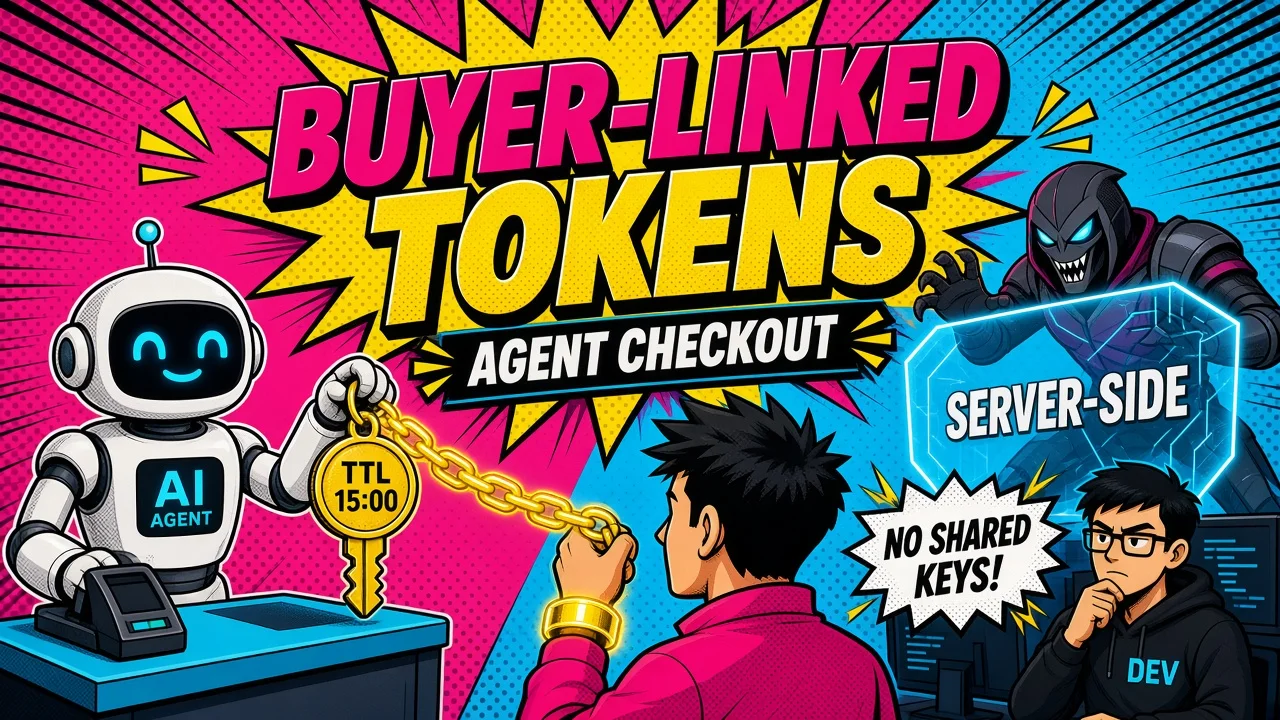
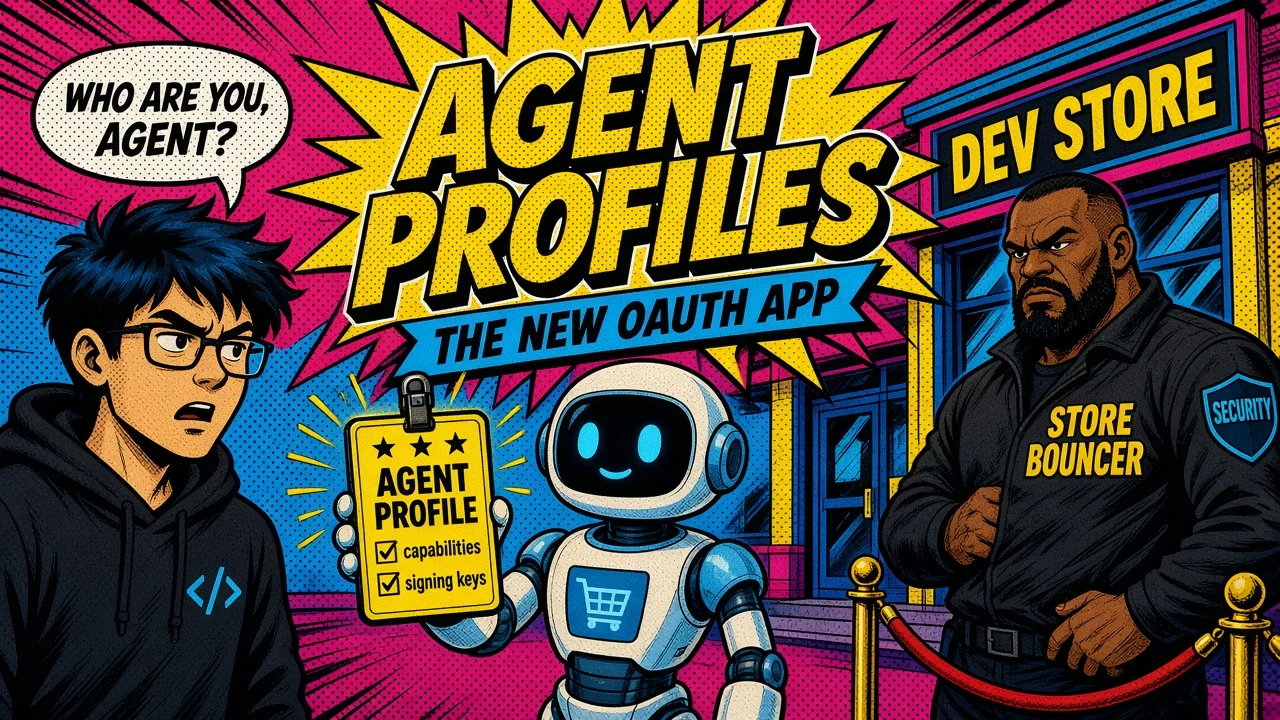
For the identity side, see UCP agent profiles and buyer-linked tokens for agent checkout.

The numbers behind the shift
The change is happening faster than most of us realize. Shopify reports that in Q1 2026:
| Signal | Q1 2026, year over year |
|---|---|
| AI-driven traffic to its stores | Grew roughly 8x |
| Orders from AI-powered searches | Climbed nearly 13x |
| New buyers via AI channels | Ordering at close to 2x the rate of other channels |
Key takeaways
- Move your product logic into native Shopify structures.
- Double down on GraphQL and API integration.
- Start experimenting with MCP servers and local LLMs for internal store operations.
- Learn the trust tiers: only an approved Token-tier agent can complete checkout.
- Remember that the agent is your new “user.” Optimize for its understanding first.
More and more of commerce will run through agents. It is a great time to be a developer if you are willing to learn the new protocols. You can read more about me and my background in web applications.
If you want your Shopify catalog and checkout ready for AI agents, here’s how I help merchants and teams get agent-ready, or drop a note via contact.
Are you building a store that only humans can see, or one that the whole world can buy from?