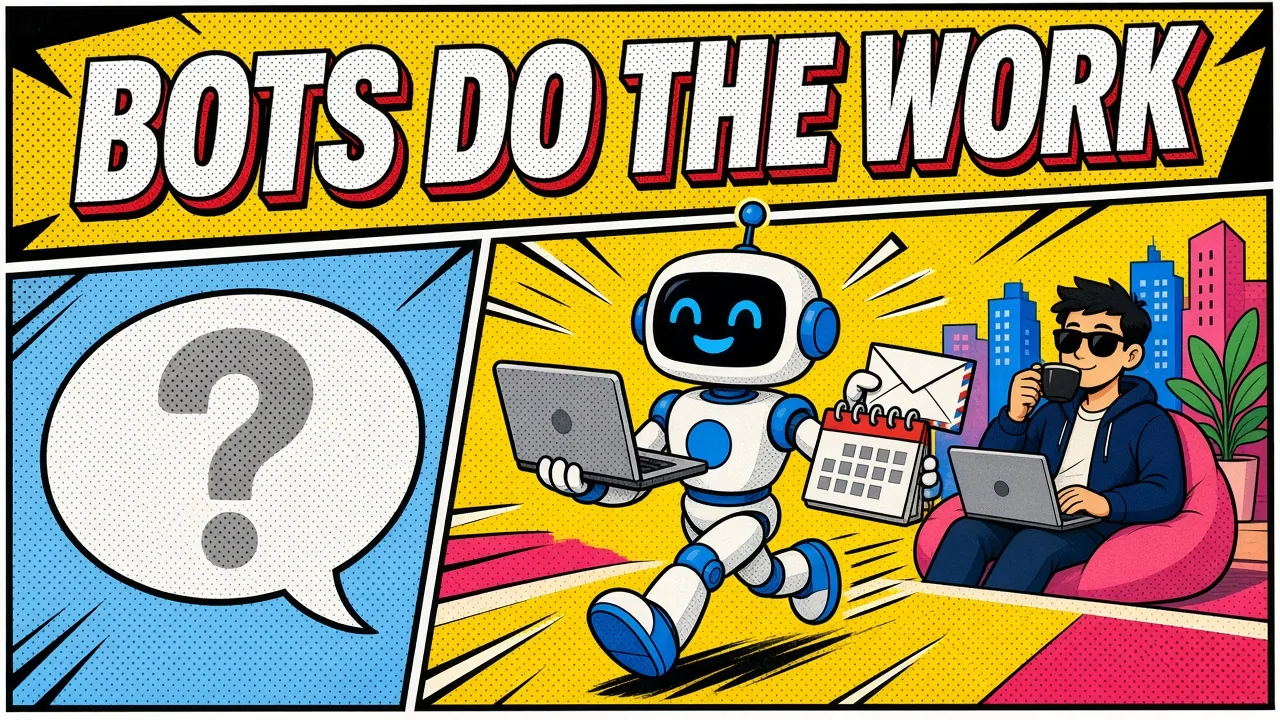
Chatbots made answers cheap. Bots are making the work around the answers cheap.
A few years ago, AI meant a chat box. You asked a question, you got an answer, and then you did the work yourself.
It was useful, but you were still the one who opened the apps, wrote the email and pressed send.
That is changing fast. In the last few months, several big AI companies shipped some kind of bot that works on its own.
It runs on a schedule, watches your inbox or your repo, uses your apps, and comes back with the work done or a draft ready for you. You don’t have to be in the chat for it to happen.
I think this is the next big wave, and it will touch a lot more people than the first one did.
Wave one: answers
The chatbot wave made one thing cheap: getting an answer. Explaining code, summarizing a long document, writing a first draft.
All of that went from minutes or hours to seconds.
But the job around the answer stayed the same. You still had to:
- notice that something needed doing
- open the right tool
- copy the answer into it
- follow up later
The chatbot waited for you. If you didn’t ask, nothing happened.
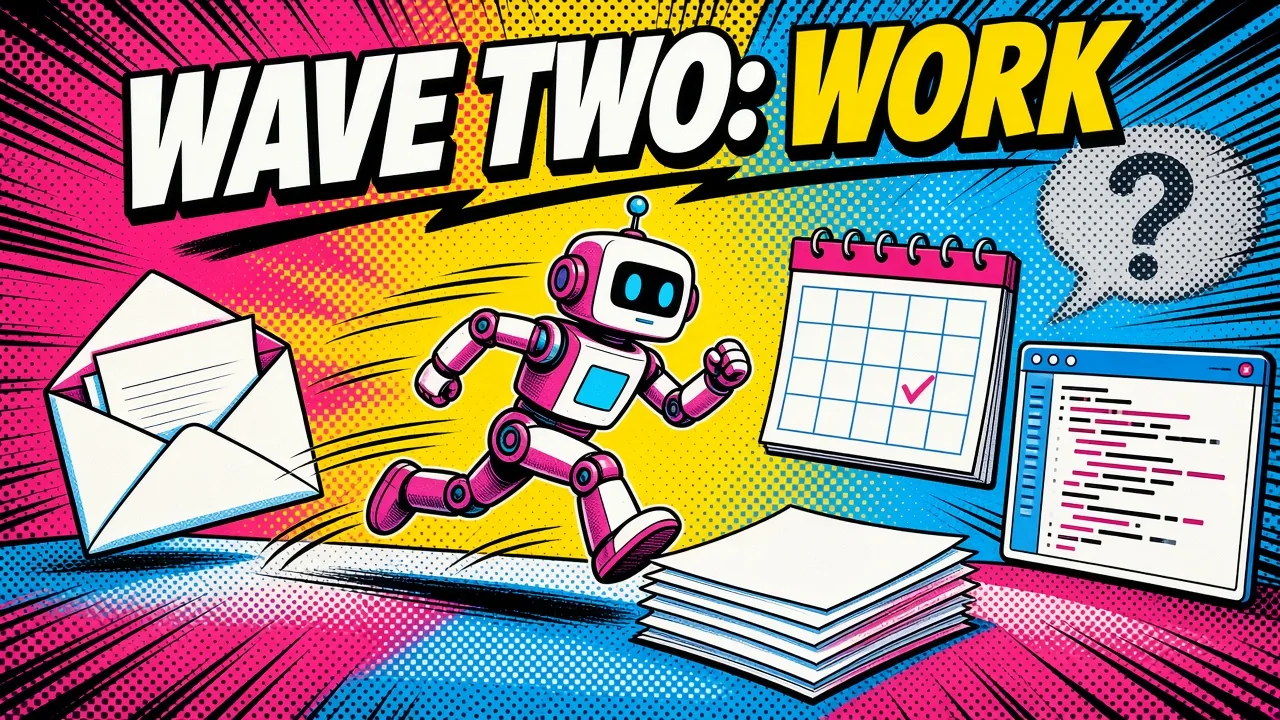
Wave two: work
The new bots flip that. You don’t ask them each time. You give them an area and a set of rules once, and they keep going.
Wave one: chatbots
The chatbot waited for you. If you didn’t ask, nothing happened.
Wave two: bots
You give the bot an area and a set of rules once, and it keeps going.
In practice that looks like:
- They wake up on their own. On a schedule, or when something happens: a new email, a failed build, a new comment.
- They use your tools. Inbox, calendar, docs, code, a browser. Not just text in a chat window.
- They finish the job or stop at the right point. A draft waiting for you, a pull request ready to review, a short note saying nothing changed.
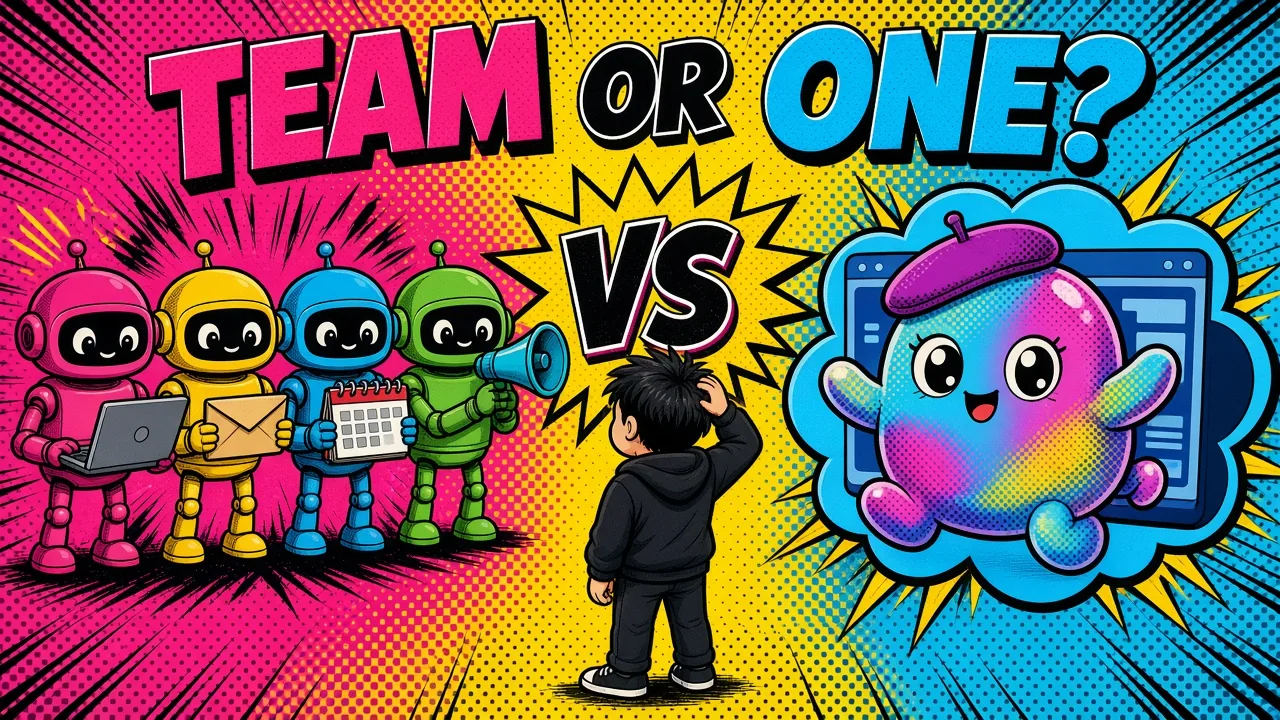
You can read how two of these products compare in Grok Bot vs OpenAI dots, and how I set mine up in Run your business with one AI assistant per area.
What changed in my week
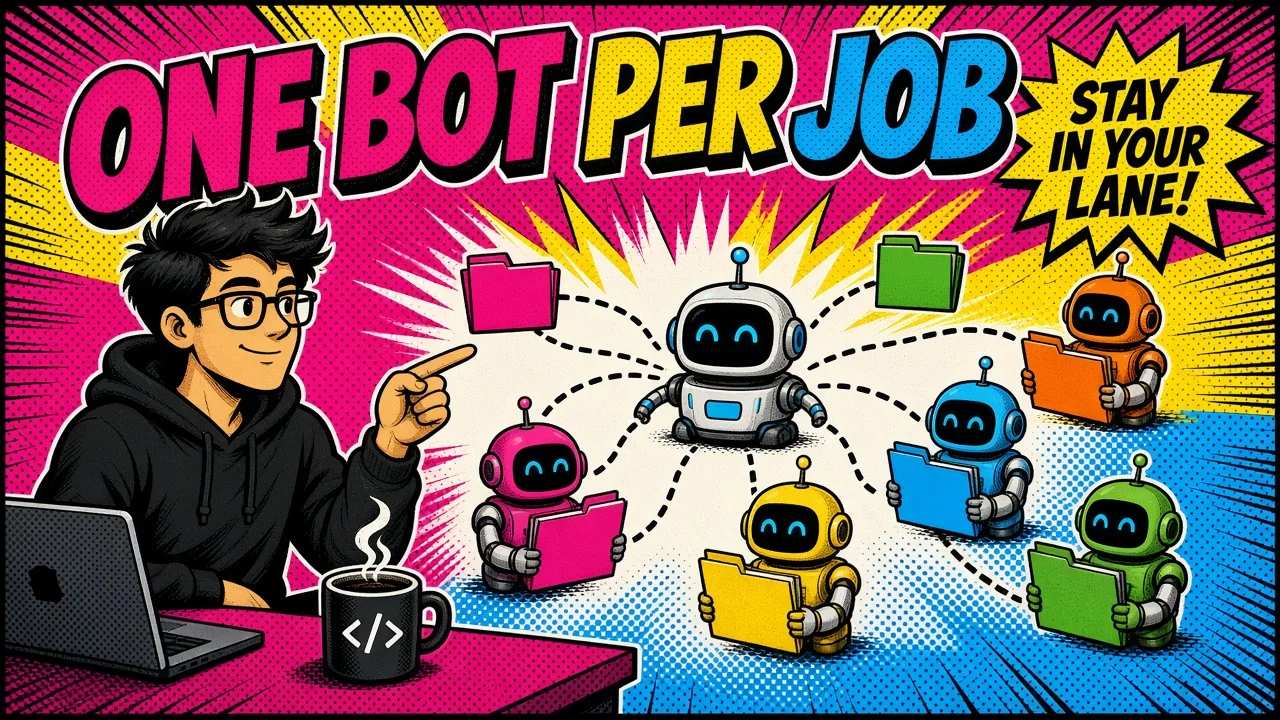
I run most of my week this way now. One bot looks after my website and blog. One handles social posts. One handles my inbox.
They talk to each other in a shared chat, and I step in when they need a decision.
Before, I was the one carrying context from one app to the next. Now the bots carry it, and I mostly review and decide.
A normal day looks like this: I open the chat, read what got done overnight, approve a few drafts, say no to one or two, and give a new idea.
That’s most of the admin part of my day.
What still needs you
Bots doing the work does not mean bots running your life. A few things still need a person, and I think they will for a while:
- Taste. A bot can write ten versions of a post. Picking the one that sounds like you is still your job.
- Sending things in your name. Anything that goes to a real person should pass through you first. Good bots draft. You press send.
- Decisions with real cost. Money, contracts, deleting things, saying no to a client.
- Setting the rules. A bot is only as good as the scope you give it. Vague rules give you vague work.

If anything, the skill that matters most now is being clear: clear about what each bot owns, what it may never touch, and when it should stop and ask.
Who should get ready
Anyone whose day is mostly moving information between tools. That covers a lot of jobs:
- freelancers and small business owners who do their own admin
- developers who spend half the day on tickets, reviews and updates
- marketers and content people who plan, write and schedule
- assistants, coordinators and operations people
This doesn’t mean those jobs go away. It means the job moves. Less doing the steps, more deciding what the steps should be and checking the result.
People who learn to set up and run a small team of bots will get a lot more done than people who don’t.
How to start small
You don’t need a big setup to try this.
- Pick one boring task you do every week.
- Give one bot that task and nothing else.
- Ask it to draft, not send.
- Review its work for two weeks.
- If it holds up, give it the next task.
That’s it. Start with one area, keep the rules strict, and add more once you trust it.
The short version
Chatbots made answers cheap. Bots are making the work around the answers cheap.
The people who do well in this wave won’t be the ones who type the best prompts. They’ll be the ones who are best at deciding what should happen, setting clear rules, and saying yes or no quickly.
Which boring weekly task would you hand to a bot first?