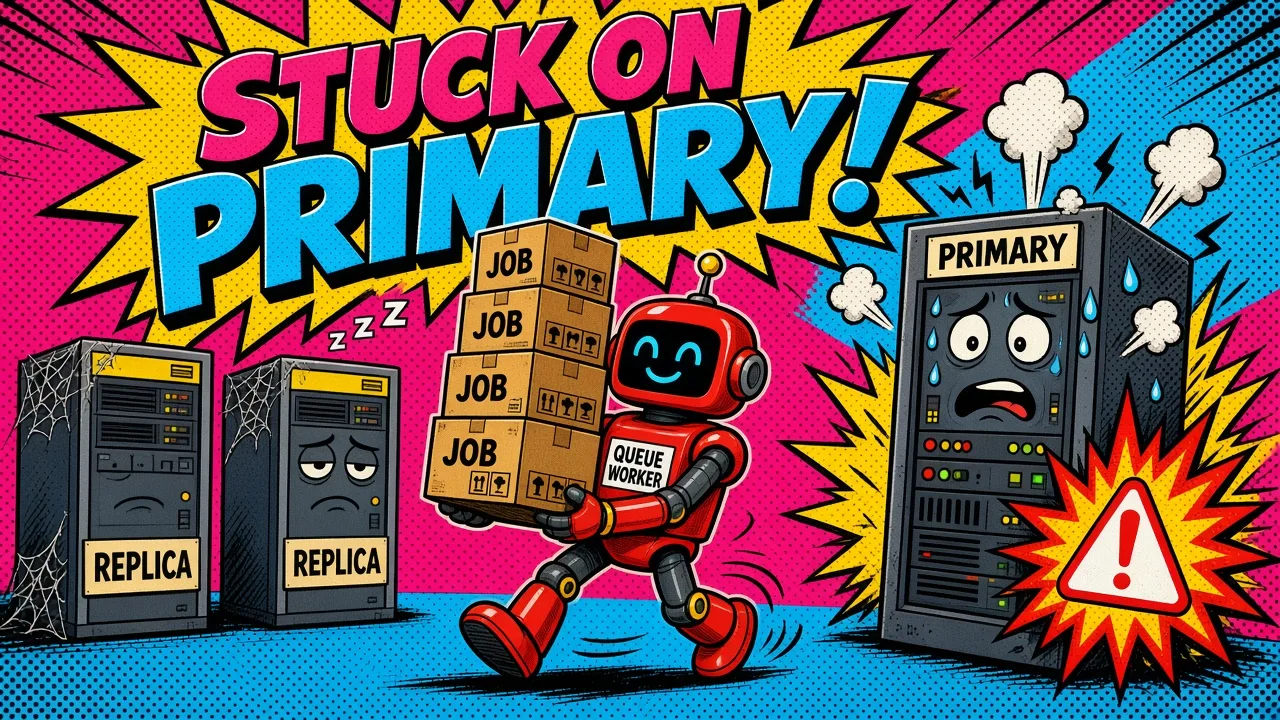
A throwing Laravel AI tool no longer ends the run. The exception message now goes to the model.
I already wrote that MCP tools should return a sentence the model can use, not a crashed server.
The first-party AI SDK now does the first half of that when a tool throws. It will not write the sentence for you, and it will not hide a messy one.
What 1.4.0 changed
The v1.4.0 release landed on 10 November 2026, 19:25 UTC (11 November 2026, 3:25am Asia/Kuala_Lumpur). The change that matters first is PR #1191, “Let agents recover from tool failures,” merged 29 October 2026, 15:28 UTC (11:28pm Asia/Kuala_Lumpur).
Before 1.4.0, an exception thrown inside a tool ended the agent run and fired AgentFailed. The old package test asserted both. After 1.4.0, that test asserts AgentFailed is not dispatched, and the run continues.
The path is specific. InvokesTools catches the tool handler’s exception, fires ToolFailed, and wraps it in ToolExecutionException. TextGenerationLoop::executedToolResult() then calls report() on the original exception and returns a failed tool result whose text is:
The tool call failed: Order 1234 can no longer be refunded.That example string is from the PR. The official test uses Forced to throw exception., then asserts the prompt still returns the model’s next reply, the tool result’s successful() method is false, and a streamed run emits a ToolResult event with the same error string.
Tools that already required approval returned a failure string like this. The PR’s point is that every tool now does the same: the model gets the failure as a tool result, and the run continues.
Listeners and approved tools
Only the handler’s exception is recovered on the normal loop. The source comment says a listener that throws is never reported as a tool failure. The test throws from an InvokingTool listener during prompt(), and the run fails. report() is not called.
Resuming an approved tool is the older catch. resolveApprovalResults() catches every throwable from that call, including a listener, and returns The tool call failed: plus the message. That path does not call report(), and it does not end the run.
The message you throw is now model input
This is the part that bites.
The model can only act on the string you put in the exception. A domain message such as “Order 1234 can no longer be refunded.” is useful. The model can tell the user, or it can try another tool.
A QueryException or an HTTP client exception is a different case. Those messages often include SQL, a filesystem path, or an internal URL. That text now goes to the model as a tool result.
The same string is on the stream event. If your frontend renders tool-result errors, the user can see it too.
Before 1.4.0
AgentFailed. The model never sees the exception message.After 1.4.0
The tool call failed: plus $exception->getMessage().This is the inverse of the MCP tool-errors rule I already use: return a sentence the model can act on, and never put stack traces, SQL, or secrets in that sentence.
The SDK now does the first half when you throw. It will not sanitize the second half.
Validation still returns a normal result
Validation is a separate path, and it predates this release. InvokesTools catches ValidationException and returns the validator’s error messages as a normal tool result, so the model can fix the arguments and call again.
That result is not marked failed. The docs already describe it. PR #1191 did not change that catch.
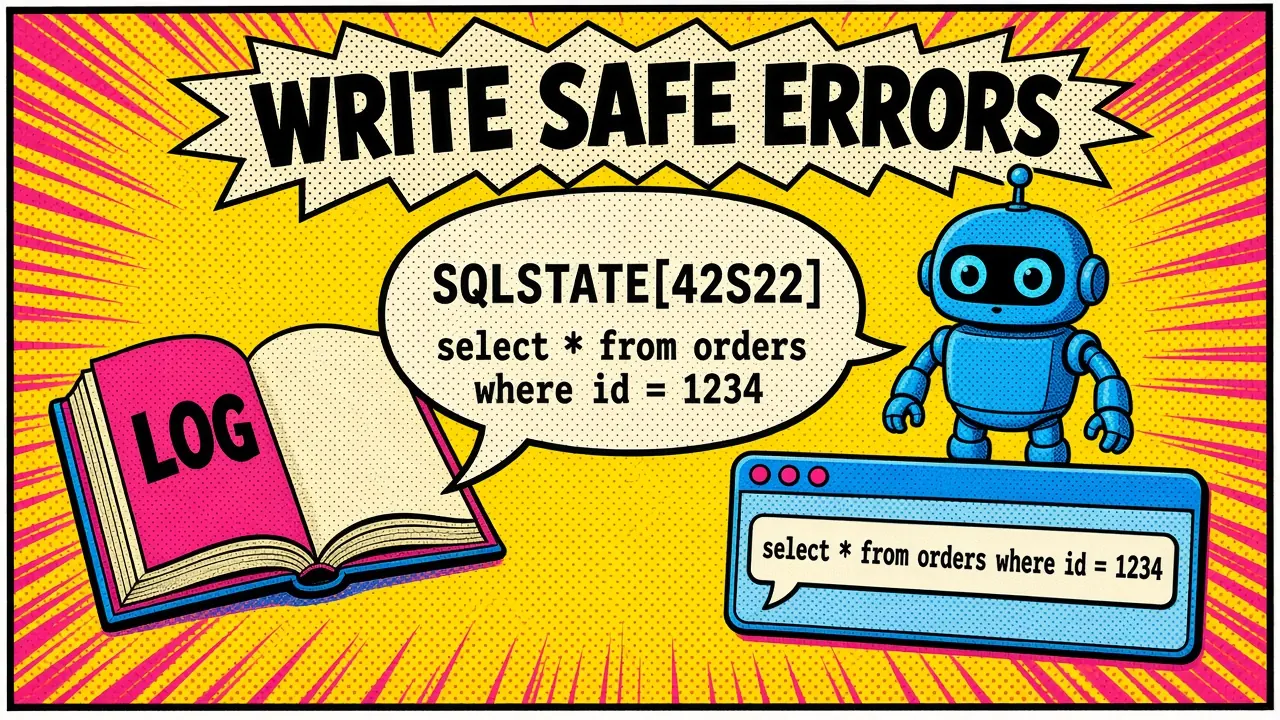
The SDK will not sanitize your exception text. If the message has SQL, the model gets the SQL.
How to keep a hard stop, and how to throw safely
Most tools should keep running this way. A refund that cannot proceed is a sentence, not a crashed agent.
Some tools should still stop the run. If you depended on AgentFailed for that, rethrow from a ToolFailed listener. The package test covers the contract: the run fails with the original exception, not ToolExecutionException, and report() is not called for that path.
use Illuminate\Support\Facades\Event;
use Laravel\Ai\Events\ToolFailed;

// RefundOrder is your tool class, not a class in the SDK.
Event::listen(ToolFailed::class, function (ToolFailed $event): void {
    if ($event->tool instanceof RefundOrder) {
        throw $event->exception;
    }
});
Register that where your other listeners live, for example in a service provider boot method.
For everything else, throw a message written for the model, or catch inside the tool and return a safe sentence. Keep the internal detail for your exception handler and your logs.
The loop is not open-ended if you forget MaxSteps. TextGenerationLoop::resolveMaxSteps() uses an explicit maxSteps when you set one. Otherwise the budget is 1.5 times the tool count, capped at 25, or 5 when the agent has no tools.
RepairToolCalls adds one step to that derived budget only.
An explicit #[MaxSteps(10)] replaces the derived budget. The docs say that explicit limit is not increased for a repaired call. Set it lower than 25 if a broken tool should not keep spending steps.
The rest of 1.4.0 that can break an upgrade
Three other changes in the same tag will show up in tests and in production if you ignore them.
PR #1190, merged 29 October 2026, 12:34 UTC (8:34pm Asia/Kuala_Lumpur), fixes Agent::fake() approval flows. Before, resuming a paused approval under a fake skipped the tool. The approved tool never ran, and no result was streamed or stored.
Now the approved tool runs, and its result is streamed and stored, the same way a real provider does it.
A rejection without a reason now ends the turn, as it does against a real provider. A test that expects a reply after a reject should pass one:
Decision::reject('Not now.')OpenAI billing 429s are not rate limits
PR #1174, merged 27 October 2026, 17:41 UTC (28 October 2026, 1:41am Asia/Kuala_Lumpur), splits OpenAI billing errors out of the rate-limit path. OpenAI uses HTTP 429 for both.
A 429 whose error.code or error.type is one of these codes now throws InsufficientCreditsException and is not retried, even with a short Retry-After:
insufficient_quotacredit_balance_exhaustedorganization_spend_limit_exceededproject_spend_limit_exceededorganization_usage_limit_exceeded
Those names are the list in insufficientCreditCodes() at v1.4.0. Other 429s still throw RateLimitedException. Failover is unchanged, because both exceptions implement FailoverableException. Code that caught RateLimitedException to detect a dead OpenAI bill will miss it.
Provider stream errors use one name
PR #1208, merged 6 November 2026, 05:19 UTC (1:19pm Asia/Kuala_Lumpur), broadcasts provider stream errors under the fixed name error. The payload’s type still holds the provider’s code (403, PERMISSION_DENIED, and so on).
If your Echo listener used the code as the event name, point it at .error.
A job failure still broadcasts as stream_failed. Error::broadcastAs() keeps that name when the type is stream_failed, and returns error otherwise. Leave an existing stream_failed listener where it is.
The same release also exposes the raw HTTP response on classification, embeddings, transcription, image, and reranking responses. Text responses already had it in 1.3.0.
What I would check this week
Run this against the app that already has laravel/ai agents, then upgrade.
- Inventory every tool
handle()method. Replace thrown infrastructure exceptions with a safe, actionable sentence, or catch and return that sentence yourself. - Decide which tools must still kill the run. Add a
ToolFailedlistener only for those. - Set
MaxStepswhere the derived budget (up to 25) is more retries than you want to pay for. - Fix faked approval tests so an approve actually runs the tool, and a reject that should continue has a reason.
- Catch
InsufficientCreditsExceptionnext toRateLimitedException. Point Echo at.error, and leavestream_failedalone. - Then run
composer update laravel/aiand repeat the staging prompt from the first section.
Key takeaways
laravel/ai1.4.0 keeps the agent running when a tool throws. The model getsThe tool call failed:plus the exception message.- That message is now model input, and it is on the stream event. Write it for the model, or catch and return a safe sentence. The SDK will not sanitize it.
- Rethrow from
ToolFailedif you still need a hard stop on a normal prompt. A listener exception still fails that run. - The same tag also changes faked approvals, OpenAI billing exceptions, and the broadcast name for provider stream errors. Check those before you upgrade.
If a tool threw a database exception in your agent tomorrow, would you be comfortable with the model, and the stream, seeing that message?