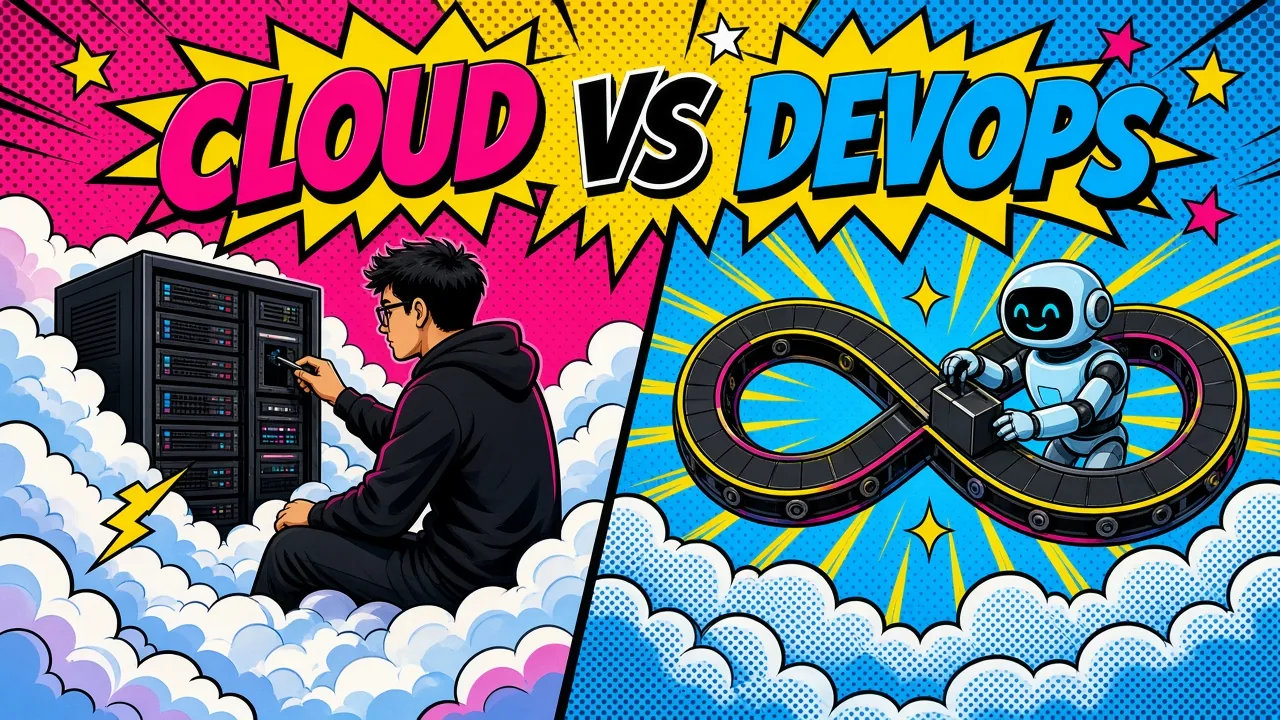
A cloud engineer builds the ground your app stands on. A DevOps engineer builds the conveyor belt that ships code onto it. Hire the wrong one first and you pay for it.
The cloud engineer vs DevOps engineer question trips up almost every team that outgrows a single server. The titles overlap, and job posts blur them together.
Hiring the wrong specialty has a real cost: infrastructure that is over-engineered and expensive, or fast to ship but prone to outages. The two roles solve different problems. This guide breaks down where they diverge, where they overlap and which one to hire first.
The cloud engineer: designing the foundation
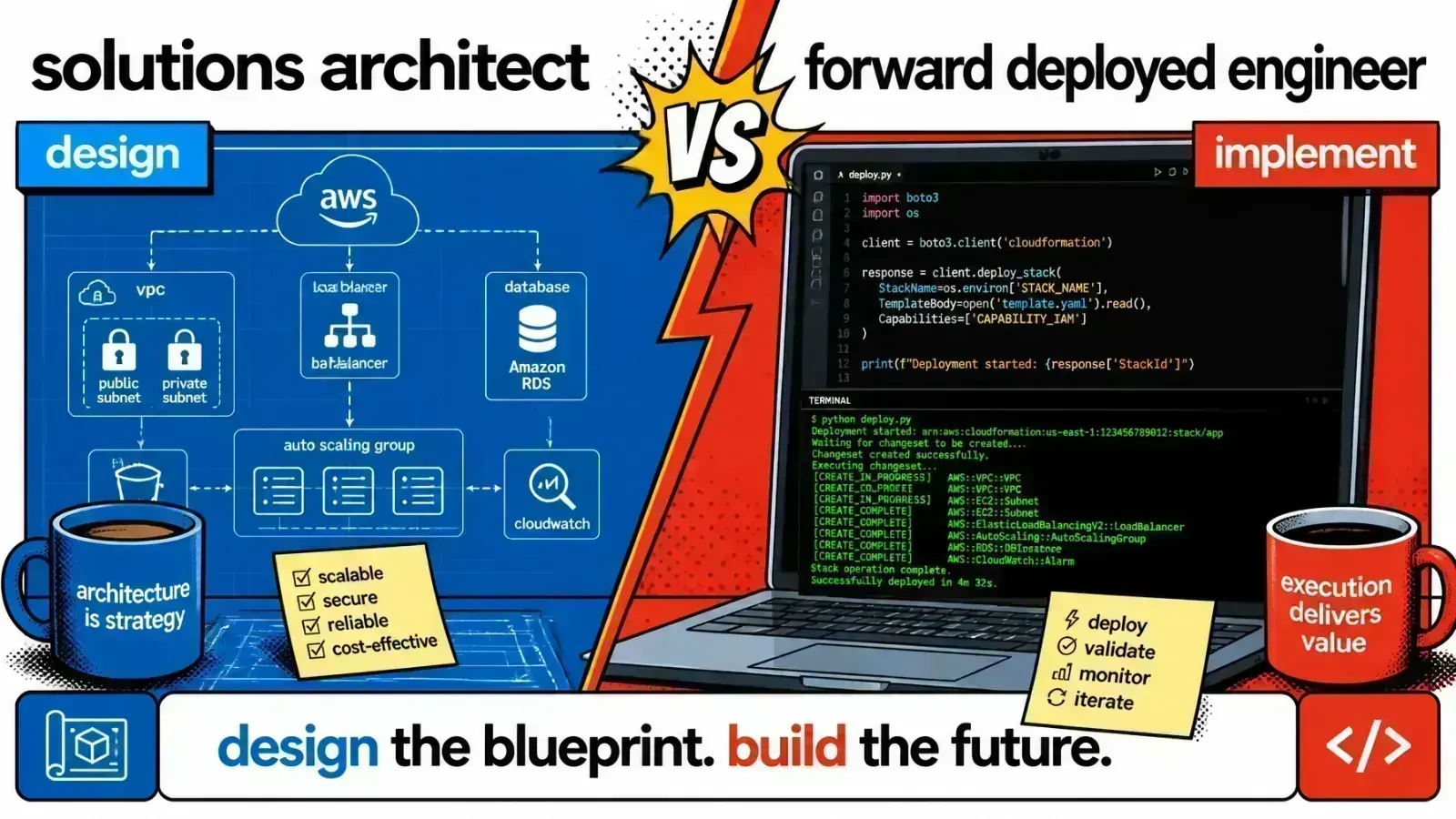
A cloud engineer acts as the architect of your digital workspace. Their main job is to design, build and manage the cloud infrastructure where your applications live.
This role focuses on the “where” and the “what” of your stack. They spend their time in the large catalogs of providers like AWS, Google Cloud Platform (GCP) or Azure.
Building the environment
Cloud engineers specialize in the environment itself. That includes designing Virtual Private Clouds (VPCs), configuring subnets and managing identity and access management (IAM) policies.
They make sure your database clusters are highly available and your storage is cost-effective.
Watching the bill
By 2026, cloud engineering has grown to include serious FinOps practices. Cloud engineers monitor resource consumption to prevent surprise bills from unoptimized cloud usage.
Leading migrations
When you need to move a legacy system to a modern cloud-native architecture, the cloud engineer leads the way. They translate business requirements into technical blueprints.
For instance, they might design an API gateway architecture to manage traffic for a distributed AI application. Their focus is the resilience, security and scalability of the infrastructure layer.
The DevOps engineer: automating the lifecycle
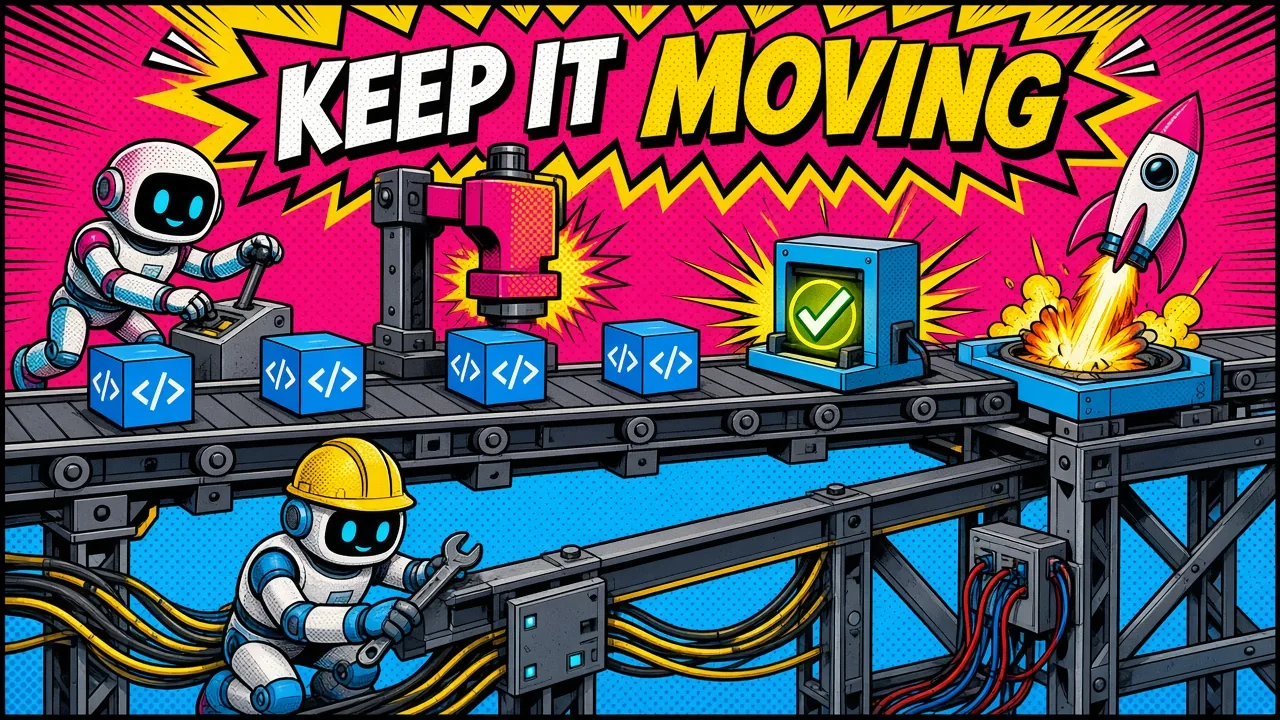
While the cloud engineer builds the foundation, the DevOps engineer builds the machinery that moves code onto it.
DevOps is a methodology focused on the software delivery lifecycle. A DevOps engineer is the bridge between development and operations teams, and their goal is to maximize the speed and reliability of releases through automation.
The pipeline is the core
The core of a DevOps engineer’s toolkit is the CI/CD pipeline (continuous integration and continuous delivery). They use tools like GitHub Actions, GitLab CI or Jenkins to automate building, testing and deploying code.
When a developer pushes a change, the DevOps engineer’s systems scan it for vulnerabilities and deploy it to a staging environment without manual steps.
Reliability and observability
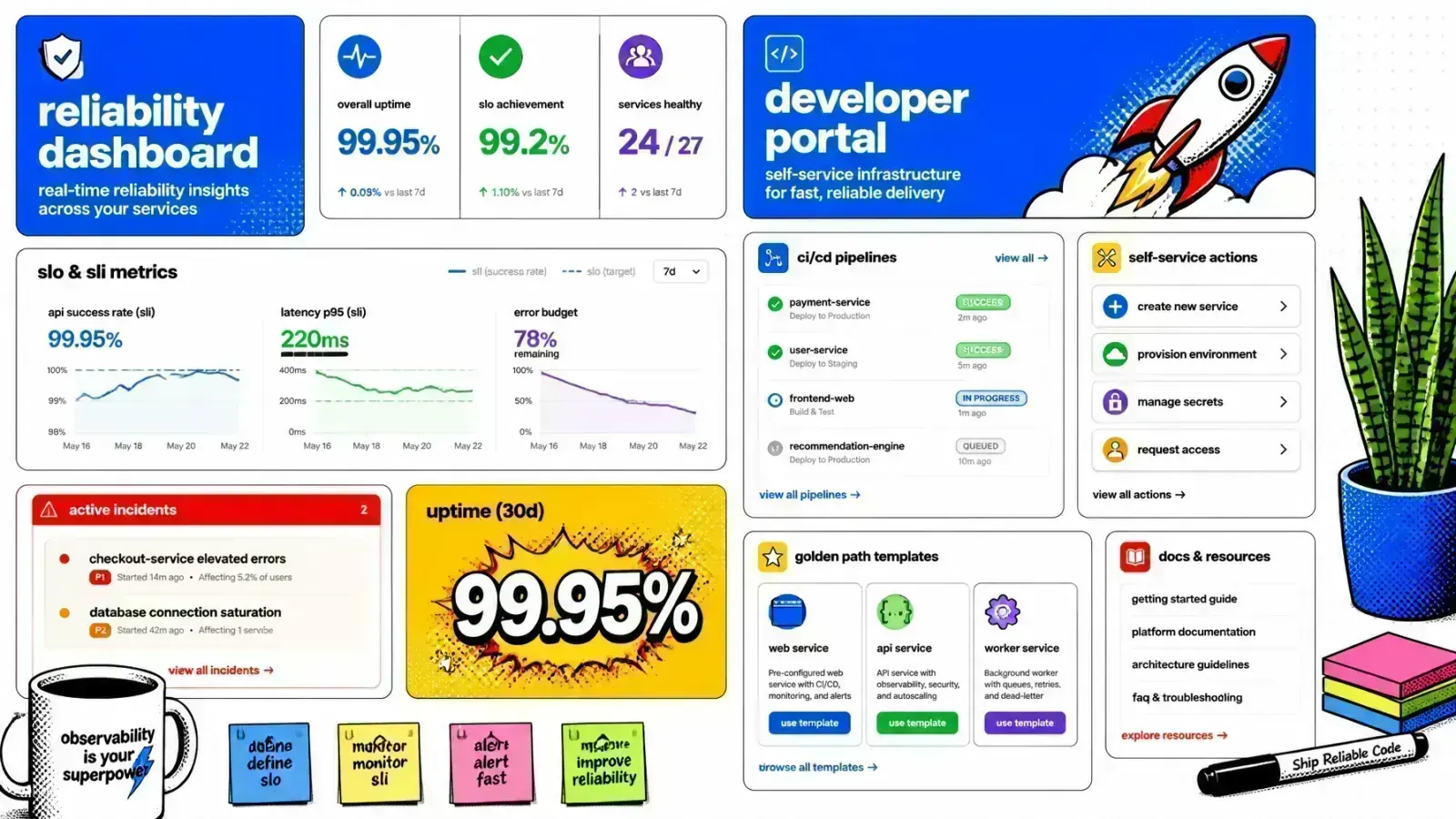
Reliability is another major pillar. DevOps engineers set up observability stacks with Prometheus and Grafana, and alerting that catches issues before they affect end users.
In modern setups, they often use tools like Docker and Coolify for hosting to simplify deployment workflows. They care deeply about the “how” of software delivery.
Side-by-side comparison: skills and focus
To see which role fits your current needs, compare their daily priorities. There is a lot of overlap, but each role has a different center of gravity.
Both rely heavily on infrastructure as code (IaC) with tools like Terraform or Pulumi, the same tooling I weigh up in Terraform vs Ansible.
| Feature | Cloud Engineer | DevOps Engineer |
|---|---|---|
| Primary Goal | Infrastructure design and management | Automation and software delivery |
| Key Focus | Networking, Security, Storage, Cost | CI/CD, Deployment, Monitoring, Culture |
| Cloud Expertise | Deep (multi-service architecture) | Functional (deployment targets) |
| Coding Focus | Infrastructure scripts (Terraform, HCL) | Glue code and automation (Bash, Python) |
| KPIs | Uptime, Cost efficiency, Security | Deployment frequency, Mean Time to Recovery |
| Tools | AWS/GCP/Azure, VPC, IAM, RDS | GitHub Actions, Docker, Kubernetes, Ansible |
Cloud engineers are often the ones who decide whether to use a managed database service or a self-hosted one. DevOps engineers make sure the migration to that database happens smoothly with zero downtime.
The overlap: platform engineering in 2026
The line between cloud and DevOps keeps getting blurrier. In high-growth startups and mature enterprises, the roles often merge into platform engineering.
The platform team builds an “Internal Developer Platform” (IDP). It lets developers self-serve their own infrastructure needs within pre-defined guardrails.
Both skill sets in one team
Platform engineering combines the architecture knowledge of a cloud engineer with the automation mindset of a DevOps engineer. They use Kubernetes (EKS, GKE or AKS) as the base layer.
By hiding the complexity of the cloud, they help product teams move faster. If this sounds close to site reliability, it is. I unpack the boundaries in SRE vs platform engineer.
What it looks like for Laravel teams
For companies running Laravel applications, this might mean a standard Docker-based environment, so the code runs the same way on a local machine as it does in a production cluster on GCP.
Browse the DevOps category to see how these workflows are structured in practice.

Choosing the right hire for your business
Which role to hire first depends on your current technical debt and business stage.
Hire a cloud engineer first
Hire a DevOps engineer first
Foundation first
If you are starting from scratch or moving away from a single-server setup, you need a cloud engineer. They will make your architecture secure and scalable from day one. Without this foundation, your automation will sit on top of a fragile environment.
Releases first
If you already have a working cloud setup but your developers are burning hours on manual deployments and firefighting, you need a DevOps engineer.
They will untangle your release process and add the guardrails you need for rapid iteration. They focus on developer experience and velocity.
Hybrid needs
Large e-commerce businesses on Shopify Plus often have hybrid needs. They might need custom middleware hosted on cloud infrastructure, plus a strict CI/CD process for their custom Shopify apps.
In these cases, a specialist who understands both the infrastructure and the automation pipeline is a strong first hire.
Key takeaways
- Cloud engineers specialize in infrastructure architecture, cloud-native services, security and cost optimization.
- DevOps engineers focus on the software delivery pipeline, automation, CI/CD and system reliability.
- Tools overlap heavily: both roles need Terraform, Docker and at least one major cloud provider.
- Platform engineering combines both roles to give developers self-service infrastructure.
- Hire a cloud engineer when you need to build or modernize the “hardware” of your digital business.
- Hire a DevOps engineer when you need to speed up your release cycle and automate manual operational tasks.
If you’re deciding between a cloud hire and a DevOps hire, or need both skill sets for a while, here’s how I help teams balance infrastructure and delivery.
How does your current team balance the need for architectural stability with the demand for rapid feature delivery?