Your AI is only as good as the data under it. The data engineer builds the factory; the data scientist refines the product.
Your business is drowning in data, but your AI models are still hallucinating or returning irrelevant results.
You have invested in the latest large language models and vector databases, yet the output stays inconsistent because the underlying data is a fragmented mess of raw logs and poorly formatted JSON.
The foundation problem
Without a solid foundation, even the most advanced neural network is a sophisticated guessing machine. The fix starts with understanding the distinct but complementary roles of the data engineer and the data scientist.
Same tools, different missions
These two roles often share an office and use the same languages, like Python and SQL, but their core missions are different.
When you deploy agentic systems or RAG architectures, the split between infrastructure and inference decides whether a project scales or stays stuck in prototyping.
The architect vs. the detective
To see the difference, picture the construction of a smart city.
The engineer builds the utilities
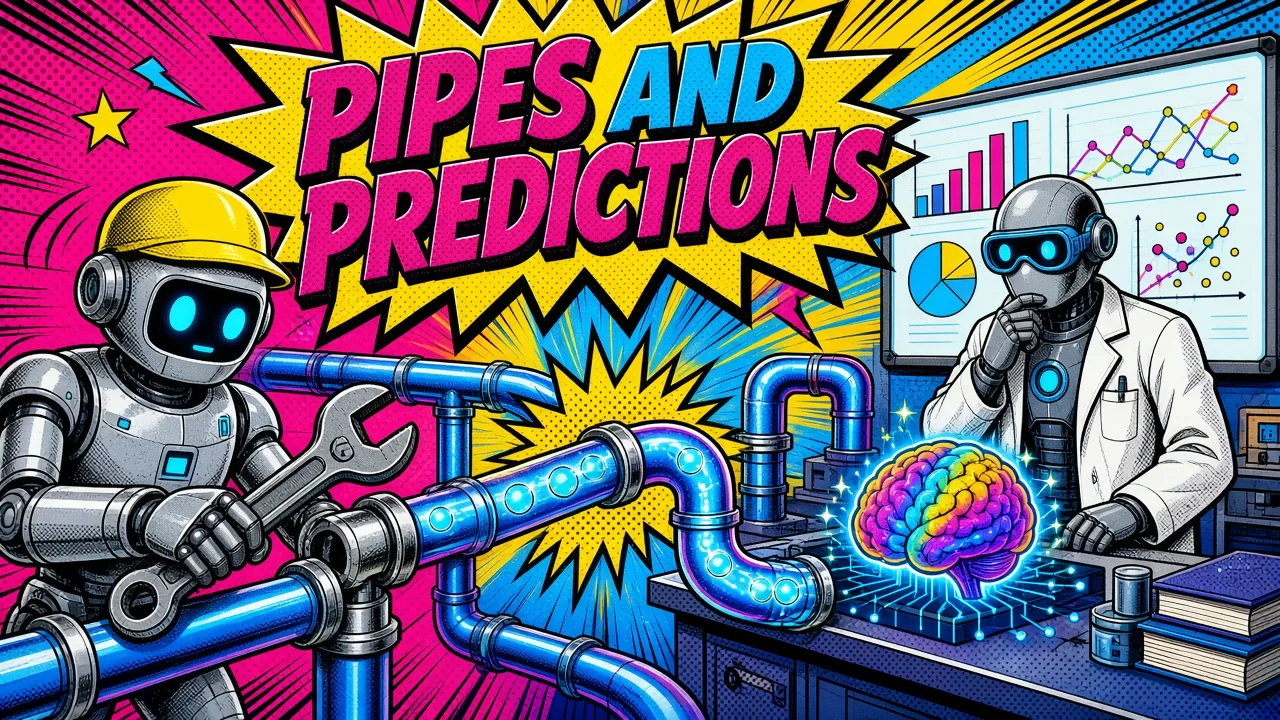
The data engineer is the civil architect and utility provider. They design the power grids, the water filtration systems and the high-speed transit tunnels.
Their goal is reliability, throughput and structural integrity. If the water stops flowing or the lights flicker, the city stops working.
The scientist plans the city
The data scientist is the urban planner and behavioral psychologist. They study traffic patterns, energy use and population growth to decide where to build the next park or how to improve the public transport schedule.
They do not build the pipes. They use what flows through the pipes to make the city smarter and more efficient.
In a technical stack
The data engineer manages the flow of information from source to storage. The data scientist then pulls that information to train models, run experiments and generate business insights.
The role of the data engineer: building the pipeline
The data engineer designs, builds and maintains the systems that collect, store and move data. They work at the “upstream” end of the lifecycle, and their main focus is the “three Vs”: Volume, Velocity and Variety.
Core responsibilities
- Pipeline development. Creating ETL (Extract, Transform, Load) or ELT processes that move data from sources like Shopify APIs, Google Cloud buckets or internal PostgreSQL databases into a central warehouse.
- Infrastructure management. Setting up and managing data warehouses (Snowflake, BigQuery) and data lakes. This often involves Docker and Coolify for self-hosted data tools, or managed services on AWS.
- Data modeling. Designing the schema and architecture of the data so it is optimized for fast queries.
- Reliability and scaling. Making sure the data infrastructure handles traffic spikes without crashing and that data stays consistent across all systems.
Thinking like a systems engineer
Data engineers spend a lot of time on system architecture and DevOps principles.
They are the ones who add circuit breakers for vector databases and make sure your RAG pipeline doesn’t fail because of a sudden surge in API requests.
The role of the data scientist: extracting the value
Once the data is clean, formatted and accessible, the data scientist takes over. They work “downstream,” using curated datasets to solve specific business problems or build predictive features.
Core responsibilities
- Exploratory Data Analysis (EDA). Investigating datasets to find hidden patterns, outliers or correlations that can inform business decisions.
- Machine learning development. Building and tuning models for classification, regression or recommendation systems, often with frameworks like PyTorch or TensorFlow.
- A/B testing and experimentation. Designing and running tests to see how changes in a web application or Shopify store affect user behavior and conversion rates.
- Data storytelling. Explaining complex mathematical findings to non-technical stakeholders through visualizations and reports.
The questions they answer
Data scientists ask questions like “Why is our churn rate increasing?” or “What is the best price point for this new subscription service?”
They rely heavily on the data engineer for high-quality data. If the data is corrupted, the model will be biased or inaccurate.
Data engineer vs data scientist: a side-by-side view
The tools and skill sets overlap, but how they use them differs. Here is how the roles compare in a production environment.
| Feature | Data Engineer | Data Scientist |
|---|---|---|
| Primary Goal | Build and maintain data systems | Analyze and model data for insights |
| Common Languages | SQL, Python, Java, Scala | Python, R, SQL |
| Key Tools | Spark, Kafka, Airflow, dbt, Docker | scikit-learn, PyTorch, Jupyter, Tableau |
| Main Output | Cleaned datasets, APIs, pipelines | Predictive models, insights, reports |
| Mindset | Engineering and reliability | Statistics and experimentation |
| Cloud Focus | Infrastructure (GCP, AWS, Terraform) | Managed ML services (SageMaker, Vertex AI) |
Same SQL, different job
A data scientist might use SQL to pull a specific cohort of users for analysis. A data engineer uses SQL to optimize a transformation job that processes millions of rows.
The synergy in modern AI stacks
With LLMs and generative AI, the lines between these roles are blurring, but you still need both specialists. A similar boundary is being redrawn between the ML engineer and the AI engineer. Consider a Retrieval-Augmented Generation (RAG) system.
The engineer’s half of RAG
The data engineer builds the ingestion pipeline that scrapes documentation, cleans the text, generates embeddings and stores them in a vector database like pgvector.
They make sure the API gateway is secure and that the index stays fresh, whether through scheduled batch jobs or near-real-time streaming.
The scientist’s half of RAG
The data scientist then evaluates how well the RAG system performs. They experiment with different embedding models, adjust the “top-k” retrieval parameters and fine-tune the prompts so the AI gives the most accurate and helpful responses.
Only an engineer
Only a scientist
Why you need both
Without the engineer, the scientist has no data to query. Without the scientist, nobody knows if the answers are any good.
Both are essential for moving beyond basic chatbots and into agentic commerce solutions.

Which role does your project need?
If you are a startup or an established business modernizing your digital presence, you might wonder which hire to make first.
You need a data engineer if
- Your data is scattered across multiple SaaS platforms and spreadsheets.
- Your existing reports are slow or frequently crash.
- You want to build a real-time data streaming platform or a scalable AI infrastructure.
- You are migrating to the cloud (GCP or AWS) and need a custom pipeline.
You need a data scientist if
- You have a large amount of clean data but do not know how to use it.
- You want to build recommendation engines or churn prediction models.
- You need to run complex experiments to optimize your marketing spend.
- You want to use AI to find specific insights that are not obvious from standard reporting.
Build the foundation first
Often, the best approach is to build the engineering foundation first. It is impossible to do science on a pile of broken pipes.
Key takeaways
- Data engineers focus on the “how” of data movement and storage. They are software engineers specialized in distributed systems and infrastructure.
- Data scientists focus on the “what” and “why” of the data. They are statisticians and analysts specialized in extracting meaning and building models.
- Collaboration is key for AI success: a good RAG or agentic system needs solid engineering to feed solid science.
- Tooling overlaps in Python and SQL, but engineers lean toward orchestration (Airflow, dbt) while scientists lean toward modeling (scikit-learn, PyTorch).
- Foundation first. You can’t do meaningful data science without a reliable data engineering infrastructure.
If your AI project is stuck because the data underneath it is a mess, here’s how I help teams build the data pipeline and RAG foundation first.
How are you currently handling the gap between your raw data infrastructure and your analytical insights?