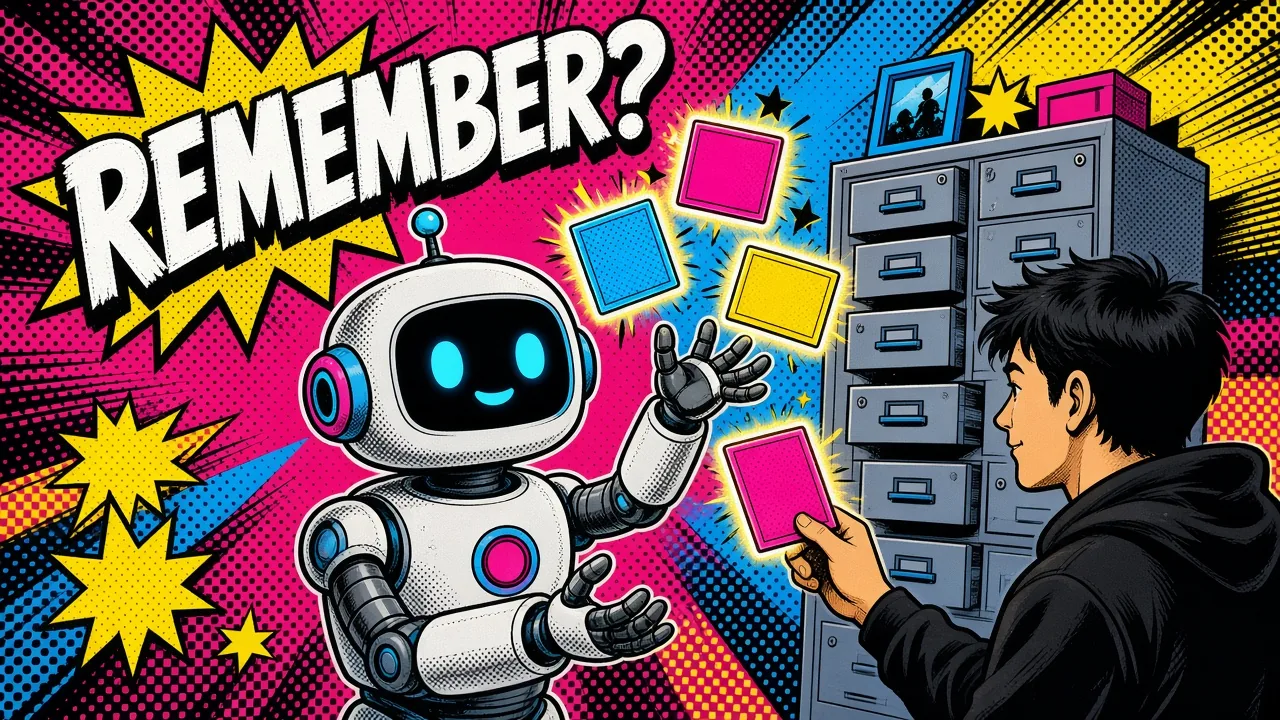
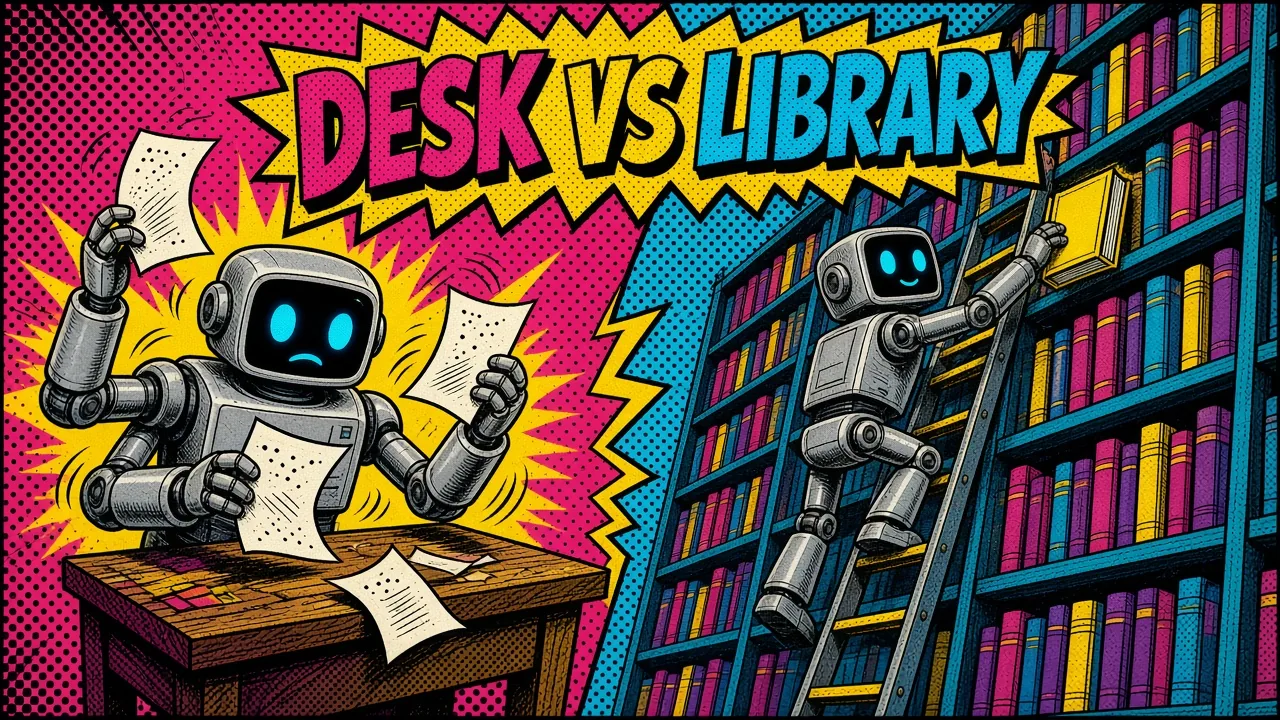
A context window is a desk. Memory is a library. Stop trying to fit the whole library on the desk.
Large language models have a memory problem that costs you money and performance. You spend thousands of tokens feeding the same documentation, user history and context into every prompt.
Yet the moment the session ends, the model forgets everything. It is like hiring a genius consultant who gets total amnesia the instant they walk out the door.
Why context stuffing breaks down
This cycle of “context stuffing” doesn’t hold up in production. Relying only on a massive context window leads to high latency and the “lost in the middle” effect, where models ignore data buried in the center of a large prompt.
To build agentic systems that actually remember, you must separate the short-lived context window from persistent long-term memory.
A solid AI architecture mixes RAG, vector databases and careful context management. This guide breaks down the technical differences between context and memory, and how to build a hybrid that scales.
Understanding the context window
The context window is the model’s immediate working memory. It is the total number of tokens (words or parts of words) the model can process at one moment.
When you send a prompt to a frontier model like Claude or GPT, the window holds your current instruction, the previous conversation and any files you attached. To see how much of a window your own prompt uses, paste it into my context window checker.
The desk analogy
Think of the context window as a physical desk. You can only fit so many papers on it at once. Add a new stack of documents and you have to push the old ones off.
Once a token falls out of this window, the model loses all awareness of it. It does not matter if the information was vital. It is gone.
Big windows are still temporary
Modern models offer very large context windows: current Claude and Gemini models both go up to one million tokens. That is impressive, but it is still temporary, and it is not a replacement for a database.
Using a large window for everything is an expensive way to handle data that should be stored permanently. Bigger is not automatically better either: accuracy and recall drop as the window fills, a problem the field now calls “context rot.”
The illusion of long-term memory
Many developers mistake a long context window for long-term memory. It is a dangerous technical shortcut.
If you are building for Shopify Plus, for example, you might be tempted to dump your entire product catalog into the prompt. That creates three immediate problems:
- Cost. You pay for those tokens every time the user asks a question.
- Latency. The more tokens you send, the longer the model takes to reason and respond.
- Accuracy. Large context windows are prone to noise. The model may hallucinate because it is overwhelmed by irrelevant data.
What real memory looks like
True long-term memory is persistent. It lives outside the model.
It lets an AI agent remember a user’s preference from three months ago without including that preference in every API call. This is where Retrieval-Augmented Generation (RAG) becomes the hero of your architecture.
RAG: the external brain for AI
Retrieval-Augmented Generation (RAG) is the bridge between a stateless LLM and a persistent knowledge base.
Instead of stuffing everything into the context window, you store your data in a vector database. When a query comes in, you run a semantic search to find only the most relevant “chunks” of information.
Lean prompts, focused model
Those chunks are then injected into the context window. The prompt stays lean and the model stays focused. RAG turns the “desk” (context window) into a tool for reasoning over a “library” (vector database).
pgvector for Laravel teams
For teams in the Laravel ecosystem, RAG has become much easier with tools like pgvector. You can store embeddings directly in your PostgreSQL database, so your relational data and your AI logic live side by side.
| Feature | Context Window | Long-Term Memory (RAG) |
|---|---|---|
| Duration | Session-based (Temporary) | Persistent (Permanent) |
| Capacity | Limited (up to ~1M tokens) | Virtually Unlimited |
| Cost | High per-request cost | Low per-request (fixed storage) |
| Update Speed | Instant for the session | Requires indexing/embedding |
The economics of tokens vs infrastructure
Choosing between a larger context window and a RAG pipeline is an economic decision.
For a small internal tool with ten users, context stuffing is fine. The engineering hours needed to build a RAG pipeline would exceed the token savings.
When the math flips
For a SaaS application or a high-volume e-commerce store, the math shifts quickly. Sending 100,000 tokens per request at scale will destroy your margins. A well-optimized RAG system might send only 2,000 tokens per request.
Run both numbers through my LLM cost calculator to see the monthly gap.
Context stuffing
RAG memory
Storage is cheaper than tokens
A vector database like Pinecone, or a self-hosted pgvector instance, often costs a fraction of the wasted tokens. The trade-offs between managed and self-hosted stores are worth weighing up front: see picking the right RAG stack.
Either way, you avoid the common RAG mistakes in production by focusing on retrieval quality rather than prompt size.
Implementing persistent memory with pgvector
If you run a Laravel application, you do not need a separate, complex vector database for basic memory. PostgreSQL with the pgvector extension is often the best choice for mid-sized applications. It lets you run similarity searches alongside your standard Eloquent queries.
Keywords vs meaning
Imagine a user searching for “shoes for rainy weather.” A traditional database looks for the keyword “rainy.” With embeddings and pgvector, the system understands the semantic link between “rainy” and “waterproof.”
// Example of a semantic search in Laravel using pgvector
// Pseudocode: inject your embedder; there is no Laravel AI:: facade.
$queryEmbedding = $embedder->embed("shoes for rainy weather");

$products = Product::query()
    ->selectRaw('name, description, embedding <=> ? as distance', [$queryEmbedding])
    ->orderBy('distance')
    ->limit(5)
    ->get();
By storing these embeddings, you create a persistent memory of your product catalog that is always ready for the LLM. You only pull the relevant products into the context window when they are needed.
Claude MCP and the future of context
The Model Context Protocol (MCP), created by Anthropic, changes how we handle context. It lets models connect directly to external data sources like Google Drive, Slack or your local filesystem.
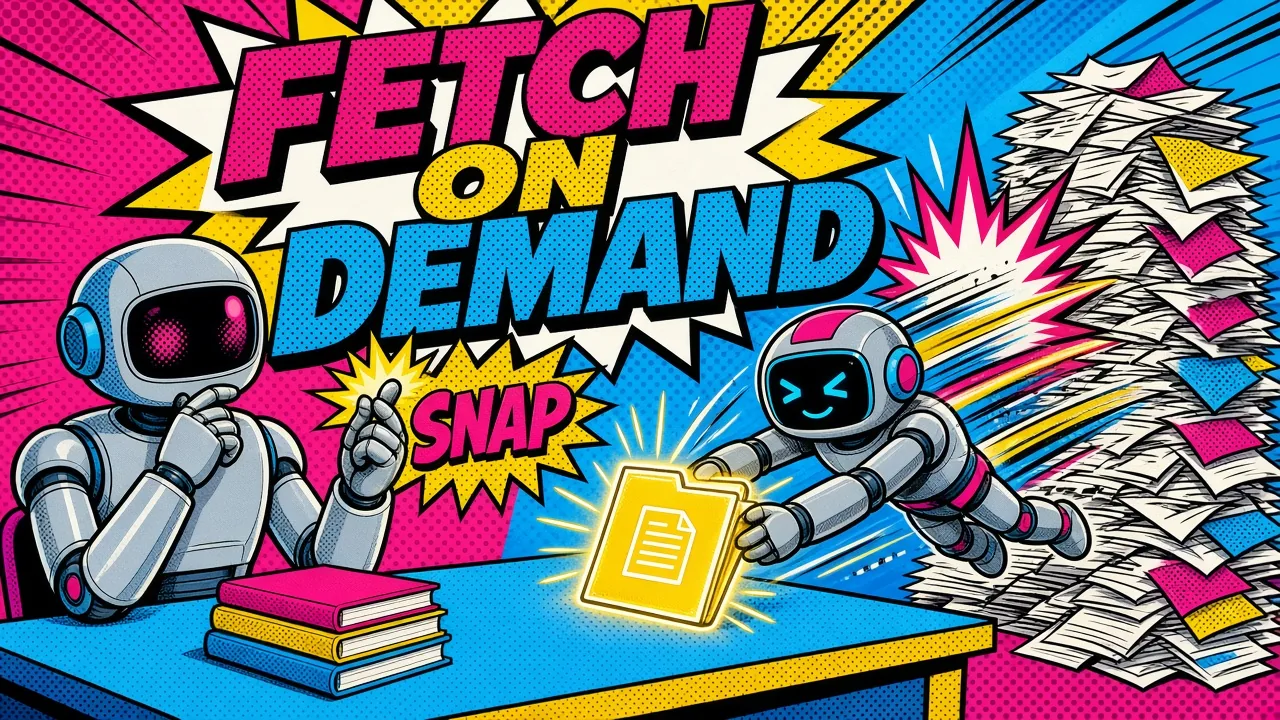
Fetch on demand
Instead of you managing what goes into the context window, the model uses Claude MCP servers to fetch what it needs on demand.
This blurs the line between context and memory. The model “remembers” where to find information and retrieves it when needed.
Reasoning over size
This is the foundation for agentic systems. An agent that can query its own database or read its own logs via MCP doesn’t need a massive context window.
It needs a high “reasoning capacity” to know which piece of memory to grab at the right time.
Hybrid strategies for agentic systems
Advanced AI systems do not choose one over the other. They use a tiered memory strategy:
- Short-term context. The last 5 to 10 messages of the conversation for immediate flow.
- Episodic memory. RAG-based retrieval of previous conversations with this specific user.
- Semantic knowledge. RAG-based retrieval of the general knowledge base (manuals, docs, catalogs).
- Tool-based memory. Tools (often via MCP) that fetch live data on demand, wrapped in circuit breakers so a slow tool doesn’t stall the agent.
This layered approach gives the model what it needs to solve a problem without the bloat of an oversized prompt.
Key takeaways
- Stop context stuffing. If your prompt is regularly over 50k tokens, you are likely wasting money and reducing accuracy.
- Use RAG for persistence. Move static or long-term data into a vector database like pgvector or Pinecone.
- Optimize for latency. Smaller prompts mean faster responses and a better user experience.
- Use MCP. The Model Context Protocol gives your agents a standard way to “reach out” to their memory stores.
- Monitor token counts. Track how many tokens actually help the final output and how many are noise.
As models get smarter, the “size” of the desk matters less than the “organization” of the library. If you’re designing memory for a production agent, here’s how I help teams build RAG memory that stays fast and affordable.
Are you building a bigger desk, or a better library?