RAG gives your model an open book at runtime. Fine-tuning changes how the model behaves. Use RAG for facts and fine-tuning for style.
Large language models are only as good as the information they can access. You build a custom application and realize the base model knows nothing about your internal documentation or yesterday’s product launch. It starts making things up.
This hallucination problem is the biggest hurdle for developers moving from a prototype to production, and it is exactly where the RAG vs fine-tuning decision gets made.
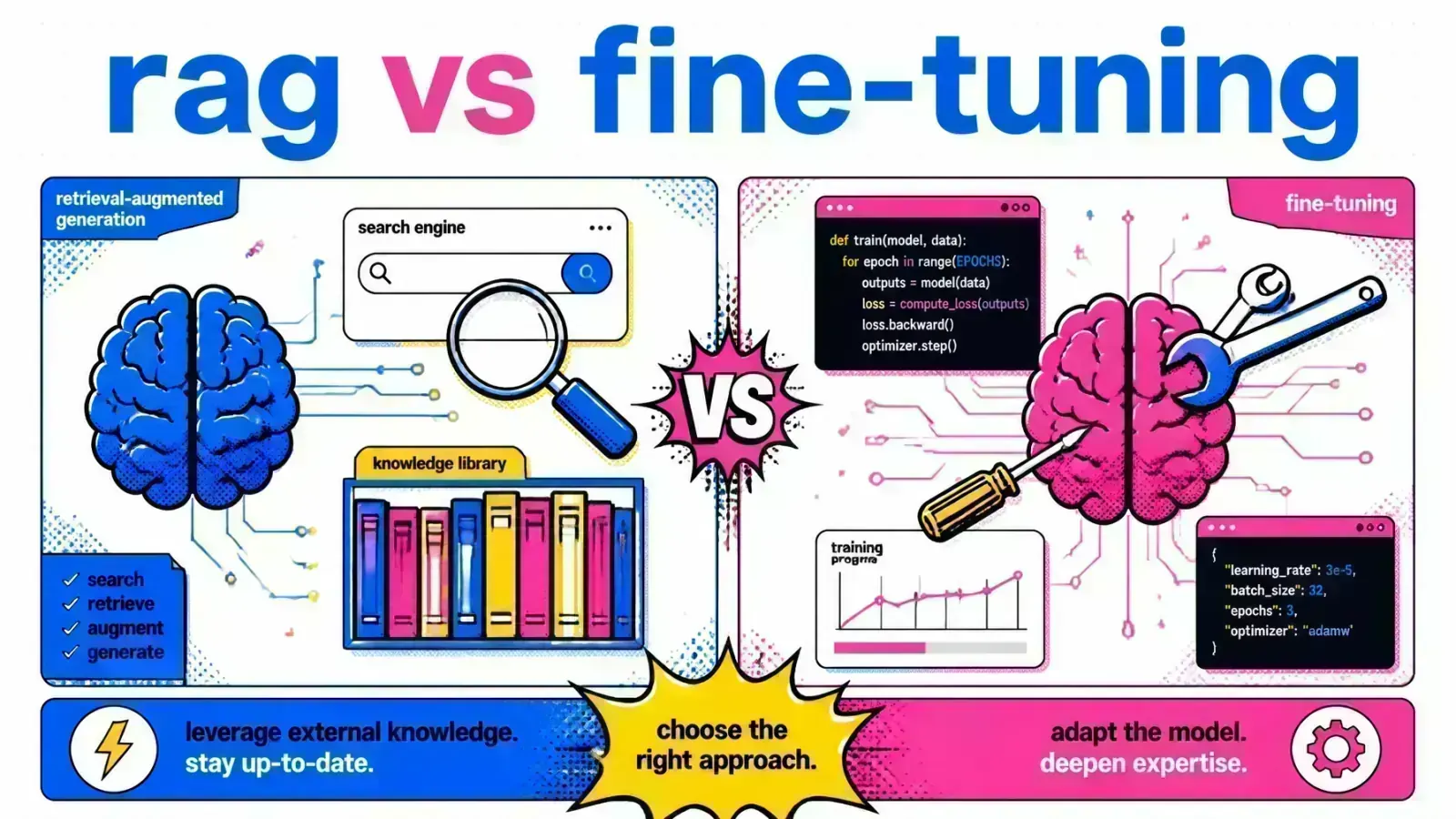
You can either give the model a search engine to find the right information at runtime, or retrain the model to bake that information into its weights. These two methods are Retrieval-Augmented Generation (RAG) and fine-tuning.
Choosing the wrong one wastes engineering hours and runs up infrastructure bills. A RAG system might be too slow for a high-traffic API. A fine-tuned model might become obsolete the moment you update your pricing page.
Understanding RAG as the open-book exam
Retrieval-Augmented Generation is like giving an LLM an open-book exam. Instead of relying on the model to remember everything from its original training, you provide relevant documents along with the user prompt.
The model then uses this context to generate an accurate answer.
How the pipeline works
The workflow has a few moving parts. First, you convert your documents into numerical representations called embeddings and store them in a vector database like pgvector or Pinecone.
When a user asks a question, your system runs a semantic search to find the most relevant “chunks” of text. These chunks are then injected into the prompt window of the LLM.
Built for changing data
RAG is the standard choice for applications where data changes frequently. If you are building a support bot for a Shopify store, it needs to know about current inventory levels.
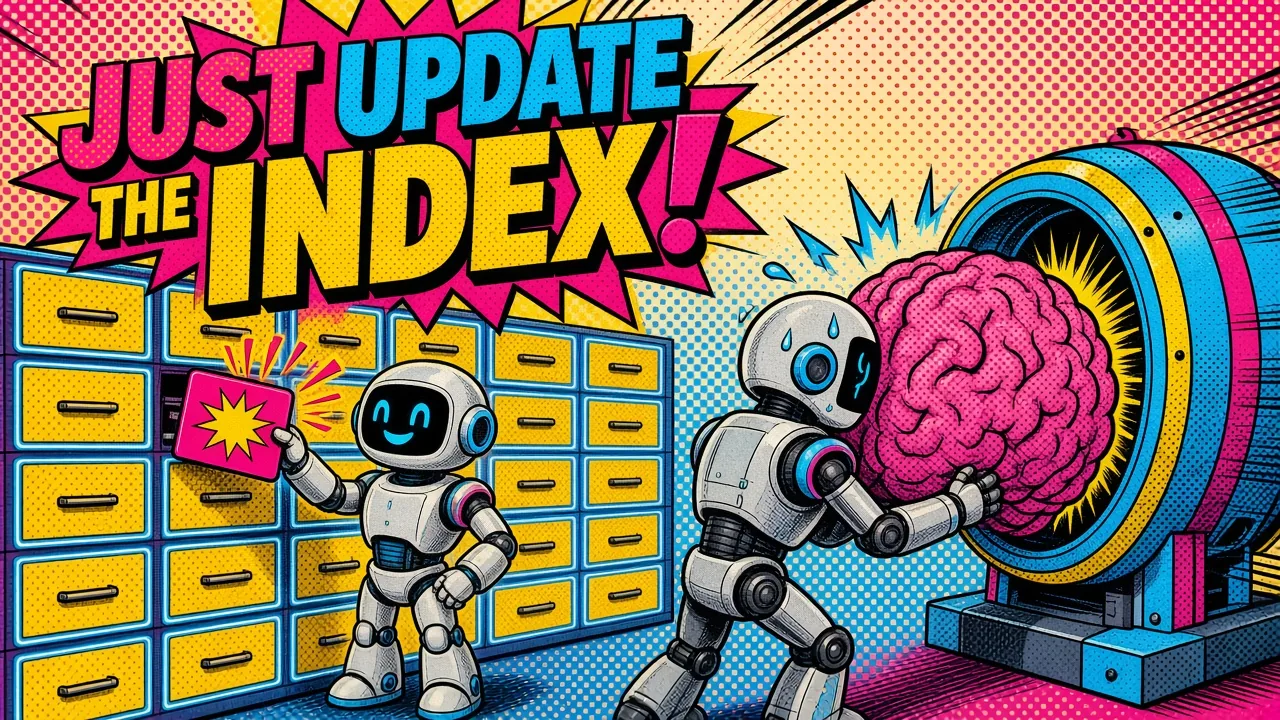
Retraining a model every time a product sells out is not practical. With RAG, you just update the vector index. You can read more about avoiding common pitfalls in our guide on 7 RAG mistakes in production.
Fine-tuning as internalized knowledge
Fine-tuning takes a pre-trained model and continues its training on a smaller, specialized dataset. You are changing the “brain” of the model by adjusting its internal weights.
The model then picks up the patterns, tone, and terminology of your domain without needing external documents for every query.
Behavior, not facts
This approach is less about adding new facts and more about teaching the model how to act. It shines when you need a consistent style, tone, or response pattern that prompting alone cannot pin down reliably.
(For strict JSON shape, reach for structured outputs or constrained decoding first. Every major provider now guarantees schema-valid output at inference time, no training run required.)
Specialized fields, frozen facts
Fine-tuning is also common in specialized industries like legal or medical tech, where the model learns the specific “language” of the field.
The major drawback is that it creates a static snapshot of knowledge. If the underlying facts change, the model stays stuck with its training data until you run another expensive training cycle.
RAG
Fine-tuning
The latency and throughput battle
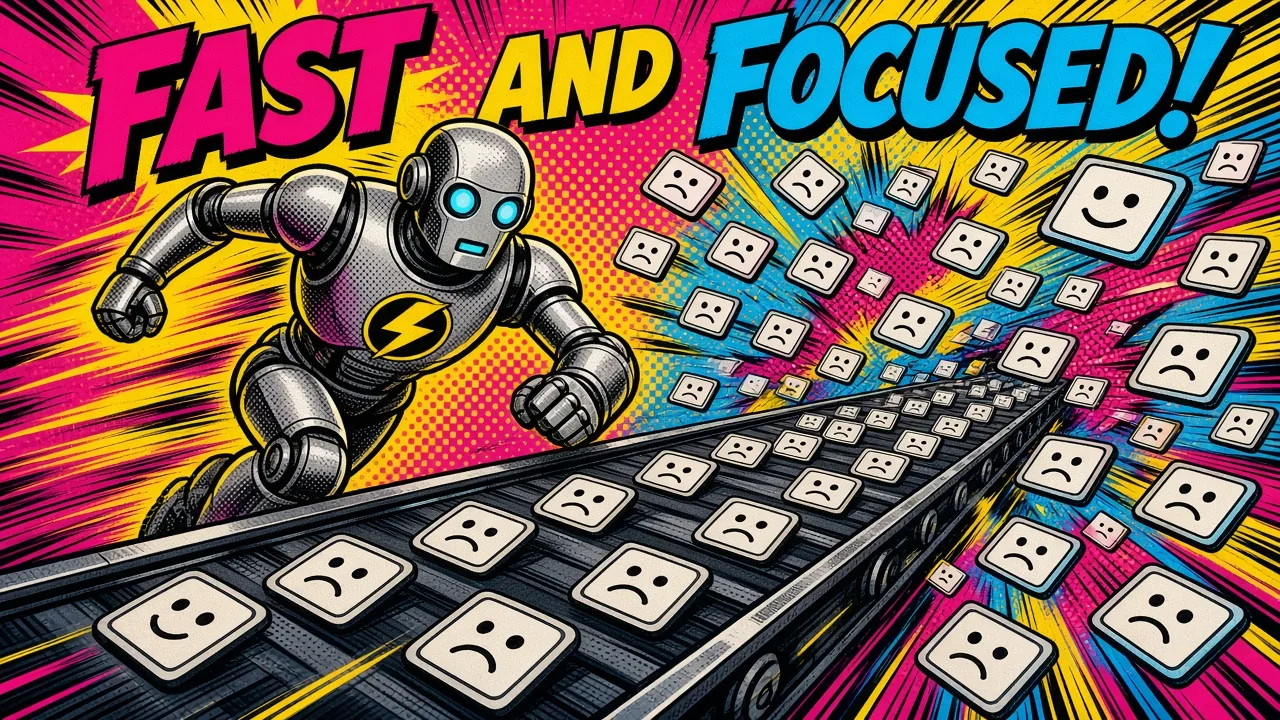
Performance is where these two architectures split sharply. RAG adds several steps to every single request.
Your application must embed the query, search the vector database, and then send a much larger prompt (with the retrieved text) to the LLM. Each step adds milliseconds or even seconds to the total response time.
When latency is a deal-breaker
For high-traffic applications, this latency can be a deal-breaker. The retrieval step also means standing up and querying a vector store alongside your app. See picking the right RAG stack for how that choice shapes both speed and cost.
Fine-tuning is lean at runtime
Fine-tuning offers much lower latency at runtime. There is no external retrieval step, and the prompt stays short because the model already “knows” the context.
This makes fine-tuned models a good fit for real-time applications or high-volume background tasks like sentiment analysis or lead scoring.
Infrastructure and cost considerations
The cost of RAG is mostly operational. You pay for storing and querying the vector database.
You also pay more for LLM tokens because your prompts are much longer. Over millions of requests, these “context tokens” add up quickly. RAG is cheaper to set up but can become more expensive at extreme scale.
Fine-tuning pays up front
Fine-tuning has a high upfront cost. You need to curate a high-quality dataset, which often requires human labeling, and significant GPU power to run the training.
Once the model is trained, your per-query costs are lower. The prompts are shorter and you do not need to maintain a complex retrieval pipeline.
Which world can your team run?
The deeper split is operational. Fine-tuning lives in the training world (GPUs, datasets, MLOps), while RAG lives in the inference-time data-pipeline world.
Data privacy and governance
For enterprise clients, data privacy is often the deciding factor. RAG offers better data governance.
Since the information is retrieved from your own database at runtime, you can apply standard access controls and make sure a user only retrieves documents they are authorized to see. The LLM never “learns” the data permanently.
The memorization risk
Fine-tuning is riskier here. If you train a model on sensitive customer data, that information is baked into the model weights.
Membership inference and training-data extraction attacks are well-documented ways to pull memorized data back out.
This makes it hard to “delete” a user’s data from a fine-tuned model short of retraining, which can lead to compliance issues under regulations like GDPR.
The hybrid case: RAG and fine-tuning together
In 2026, many advanced systems do not choose one over the other. They combine both.
You might fine-tune a smaller, cheaper model (like a Llama variant) to learn your company’s specific API schemas and brand voice. Then you use RAG to give that model access to live data.
The “how” and the “what”
This combination lets the model be both fast and accurate. Fine-tuning handles the “how” (formatting and style) while RAG handles the “what” (current facts and data).
This works especially well with Claude and the Model Context Protocol (MCP), where the model can use specific tools to fetch data while keeping a trained understanding of the environment.
Key takeaways
Choosing between RAG and fine-tuning depends on your goals for data freshness, latency, and budget.
- Use RAG for knowledge: If your data changes frequently or you need to cite sources, RAG is the standard choice. It is easier to update and more transparent.
- Use fine-tuning for behavior: If you need a consistent style, a unique brand voice, or low-latency responses, fine-tuning is the way to go. For strict output formats, try structured outputs first.
- Evaluate your infrastructure: RAG requires a reliable data pipeline and vector database. Fine-tuning requires specialized training data and GPU resources.
- Consider privacy early: RAG is generally safer for handling sensitive or permission-based data because the model does not memorize the information.
- Think hybrid for scale: Combining a fine-tuned model for behavior with a RAG pipeline for facts gives complex applications the strongest results.
- Monitor costs: Watch your token usage in RAG systems as context windows grow. Conversely, budget for periodic retraining if you choose the fine-tuning path.
If you’re deciding between these paths for a real product, here’s how I help teams ship it.
Is your current AI architecture bottlenecked by the speed of retrieval or the accuracy of the model’s internal knowledge?