Scaling a web application often feels like trying to upgrade a jet engine while the plane is mid-flight.
You start with a single server that handles every request perfectly. But as your traffic grows, you add more servers, and suddenly everything breaks.
Users are getting logged out randomly. Shopping carts are disappearing into thin air. The database is screaming under the pressure of redundant session checks.
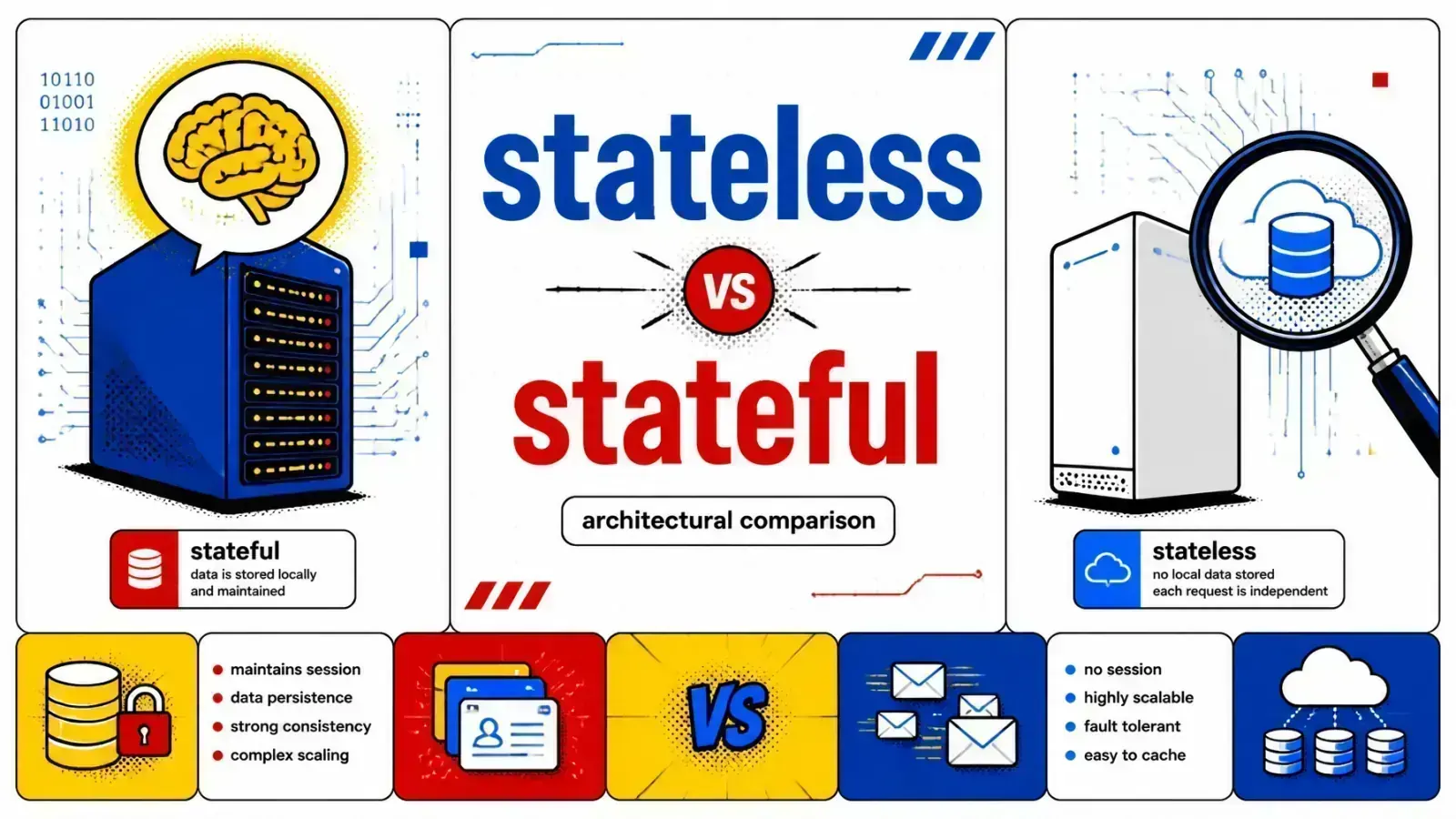
This chaos usually stems from a fundamental architectural decision made in the early stages of development. You are likely struggling with the friction between stateless and stateful design patterns.
If your application relies on the server remembering who a user is based on local memory, you are building a stateful system. This works great for small projects but becomes a nightmare when you need to scale horizontally.
On the other hand, moving to a fully stateless model requires a complete rethink of how you handle authentication and data persistence.
You need to understand the trade-offs between stateless and stateful apps before you can build reliable, fast software in the cloud.
Defining state in the digital world
Before comparing the two architectures, we must define what “state” actually means in a web context.
State is any data that the application needs to remember between different interactions. This could be a user’s login status, the items in a Shopify cart, or the progress of a multi-step form.
In a traditional web application, the server manages this state by creating a unique session for every visitor. The server stores a small file or a piece of memory linked to a specific session ID.
When the user moves from one page to another, the server looks up that ID and retrieves the state. This makes the application “stateful” because the server’s response to a request depends on what happened in previous requests.
The stateless architecture: the forgetful master
A stateless application treats every single HTTP request as a completely new event. The server does not remember anything about the client once the request is finished.
A user clicks a button, the server processes the data, sends a response, and immediately forgets that user ever existed.
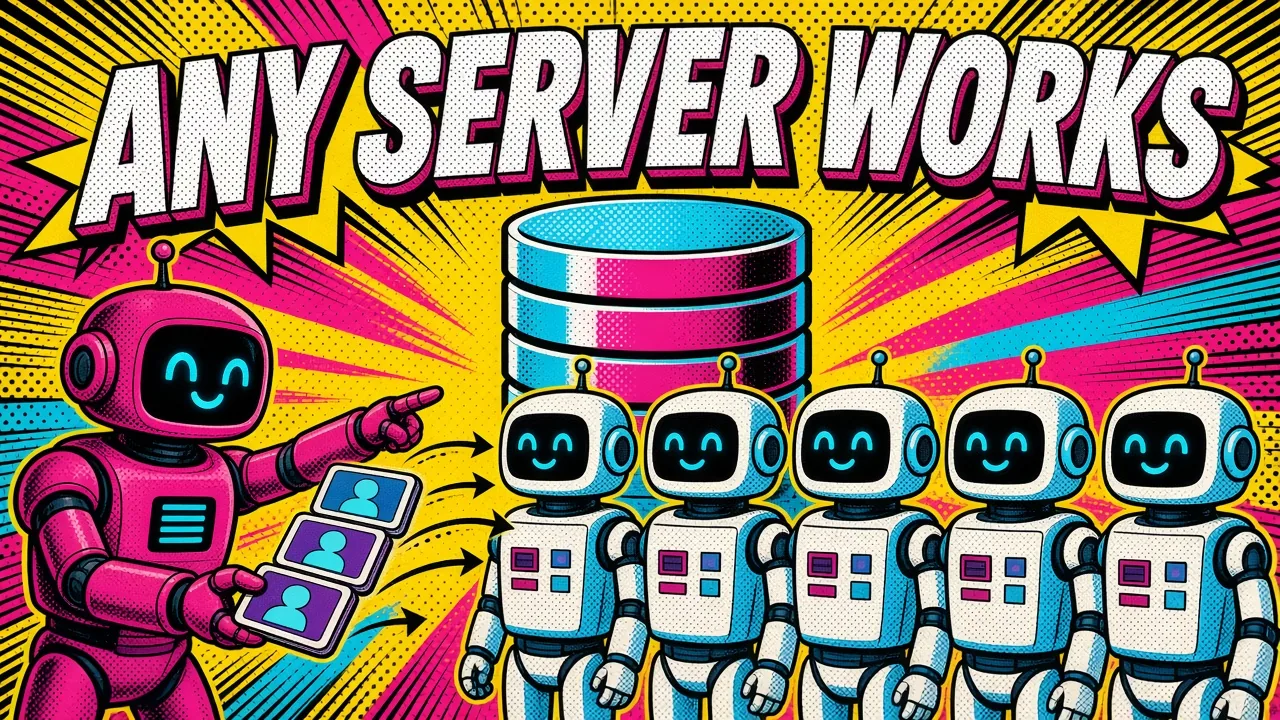
For this to work, the client must provide all the necessary information with every single request. This is why stateless apps often use JSON Web Tokens (JWT) or API keys.
The token contains the user’s identity and permissions. When the server receives the token, it validates it, performs the requested action, and sends back the result.
Why stateless scales
The primary advantage of this approach is horizontal scalability. Since the server does not store any local session data, any server in your cluster can handle any request.
You can add ten more servers to your stack using a tool like Coolify or Docker and the load balancer can distribute traffic without worrying about where the user’s session is located.
This same property is what lets a stateless tier sit cleanly behind an API gateway.
The stateful architecture: the memory expert
Stateful applications are built on the premise of continuity. The server maintains a persistent connection or a session record for every active user.
This was the default way of building the web for decades. If you are using Laravel with standard Blade templates and the built-in authentication guard, you are likely running a stateful application.
In a stateful system, the server’s internal memory or local disk stores the user’s context. This makes development faster and easier for certain features.
For example, “flashing” a success message to the next page is trivial in a stateful app. The server just puts the message in the session and reads it on the next load.
The sticky session problem
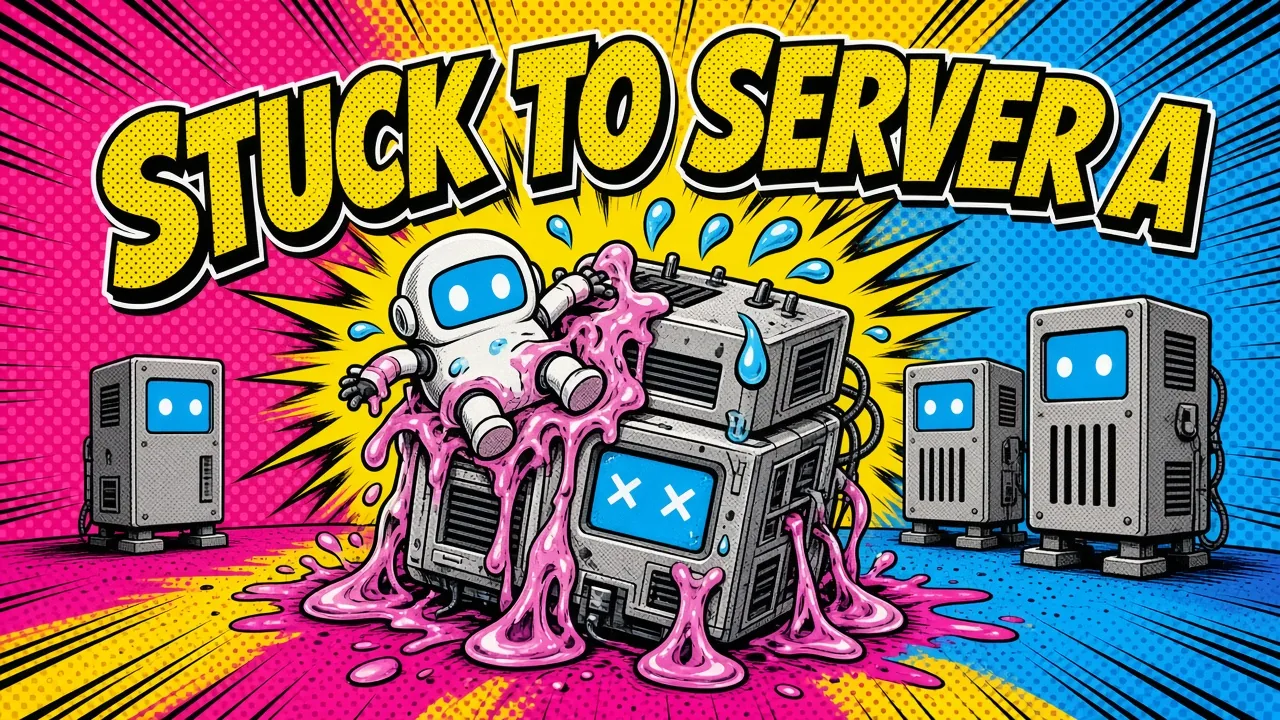
However, statefulness introduces a “sticky session” problem. If you have three servers (A, B, and C) and a user’s session is stored on Server A, the load balancer must ensure that every subsequent request from that user goes back to Server A.
If the user hits Server B, that server will have no record of them, and they will appear logged out.
If Server A crashes, all users “stuck” to it lose their session data.
Stateless vs stateful apps: key differences at a glance
Choosing between these two paths depends on your specific technical requirements. Below is a breakdown of how they compare across critical engineering metrics.
| Feature | Stateless Apps | Stateful Apps |
|---|---|---|
| Data storage | State is stored on the client or a shared database/cache. | State is stored in the server’s memory or local storage. |
| Scalability | High. Any server can process any request. | Low. Requires sticky sessions or complex synchronization. |
| Resilience | High. If a server dies, another one takes over instantly. | Moderate. Server failure often leads to session loss. |
| Complexity | Higher initial setup for token management and external caching. | Lower initial setup for small-scale projects. |
| Performance | Potential overhead from passing tokens or fetching data from Redis. | Faster local memory access but slower overall scaling. |
Practical implementation in Laravel
In the world of PHP development, Laravel gives you the flexibility to choose either path. By default, the web middleware group uses stateful sessions.
It stores a session cookie on the browser and matches it to a server-side entry, which since Laravel 11 lands in the database driver out of the box. This is perfect for traditional dashboards where you need simple state management and cookie-based CSRF protection.
To make your Laravel app stateless, you move toward token-based authentication using Laravel Sanctum or Passport.
You skip session cookies on your API routes and let every request carry its own bearer token, validating the user against a shared store like Redis or the database. This shift is essential when building backends for mobile apps or complex React/Vue frontends.
This is also where the stateless model pays off as you grow. Because no node owns a session, you can lean on horizontal scaling and add capacity behind the load balancer without any session-affinity gymnastics.
Scaling with Shopify and modern e-commerce
Shopify provides an interesting look at how these architectures live together. The Shopify platform itself is a massive distributed system.
While the “state” of a store (orders, inventory, customers) is preserved in giant databases, the web tier that handles incoming traffic is designed to be stateless. This allows Shopify to handle massive spikes during Black Friday by spinning up thousands of web workers that don’t need to share local memory.
If you are building agentic commerce solutions on Shopify, your app architecture should lean toward statelessness. Your app will receive webhooks and API calls from various Shopify nodes.
If your app is stateful and relies on local memory to track a multi-step checkout process, you will likely encounter race conditions or lost data as Shopify’s infrastructure scales.
Using a shared Redis instance to store temporary job state is the professional way to handle this.
DevOps and deployment considerations
Your choice between stateless vs stateful apps will dictate your DevOps strategy. Stateless apps are the “gold standard” for containerization.
Since they have no local dependencies, you can run them in Docker containers and deploy them to any cloud provider without friction. You don’t need to worry about preserving the “health” of a specific server instance.
Stateful apps need more care
Stateful apps require much more care. If you are deploying a stateful Laravel app, you must ensure that your session driver is set to something central like Redis or a database.
Laravel 11 and later default to the database driver, but if you switch it back to file, each node writes sessions to its own disk and your horizontal scaling will fail.
You also need to consider how you handle deployments. A “zero-downtime” deployment is harder when you have thousands of active sessions living in server memory. You often have to wait for sessions to drain before taking a node offline.
Key takeaways
- Stateless apps treat every request as a new event, requiring the client to provide context (tokens) every time.
- Stateful apps remember user interactions through local server memory or session files, making them easier to build but harder to scale.
- Horizontal scaling is the primary driver for choosing a stateless architecture. It allows you to add servers without session conflicts.
- Laravel supports both. Use sessions for simple web apps and tokens (Sanctum) for scalable APIs.
- Shared storage (like Redis) is the bridge that allows an application to feel stateful to the user while remaining stateless at the server level.
- Shopify developers should prioritize stateless designs to handle the platform’s distributed nature and high-volume webhooks.
How are you managing session persistence in your current production environment to ensure horizontal scaling?